
A North Side prison riot a century ago was nearly lost to the pages of history
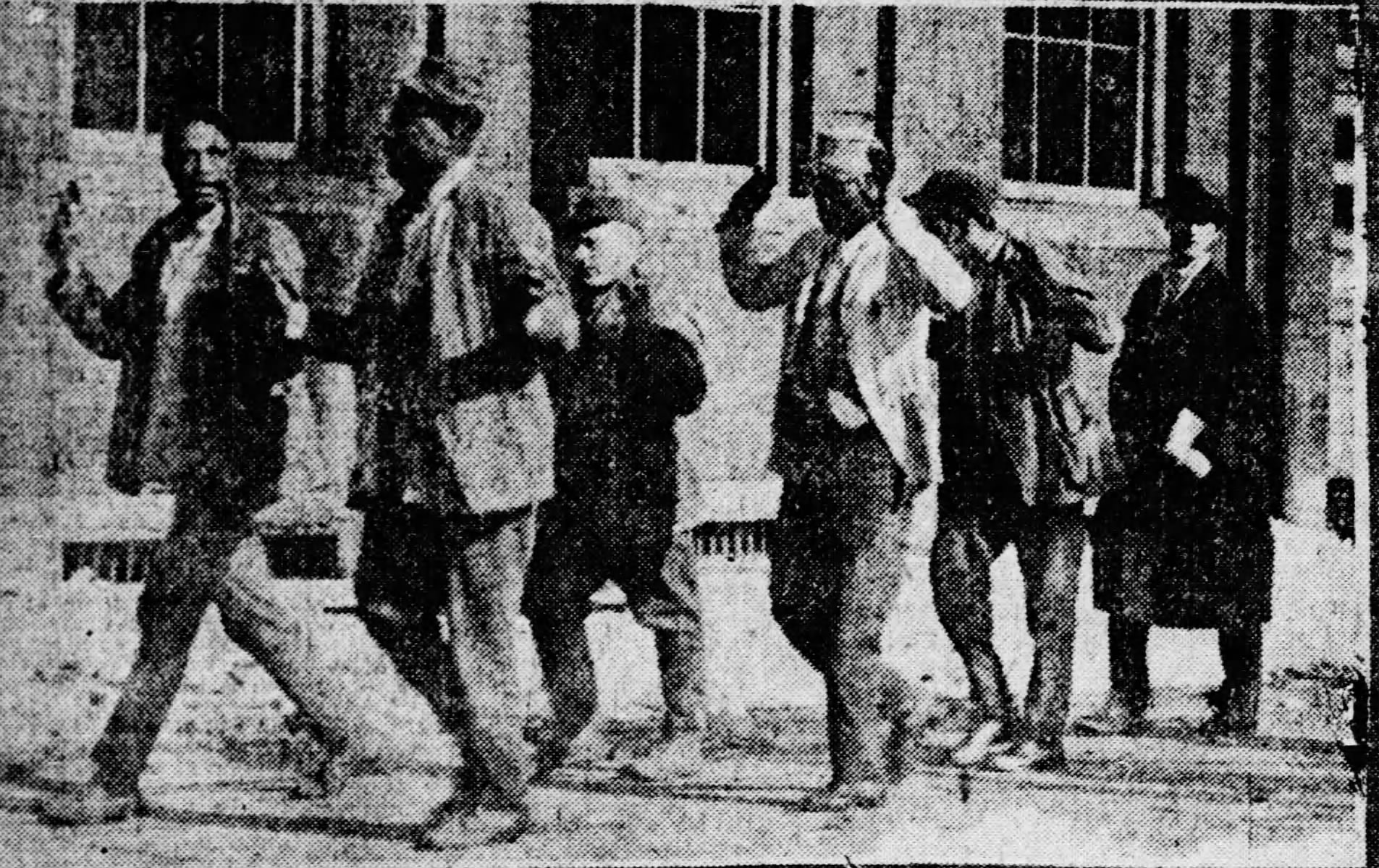
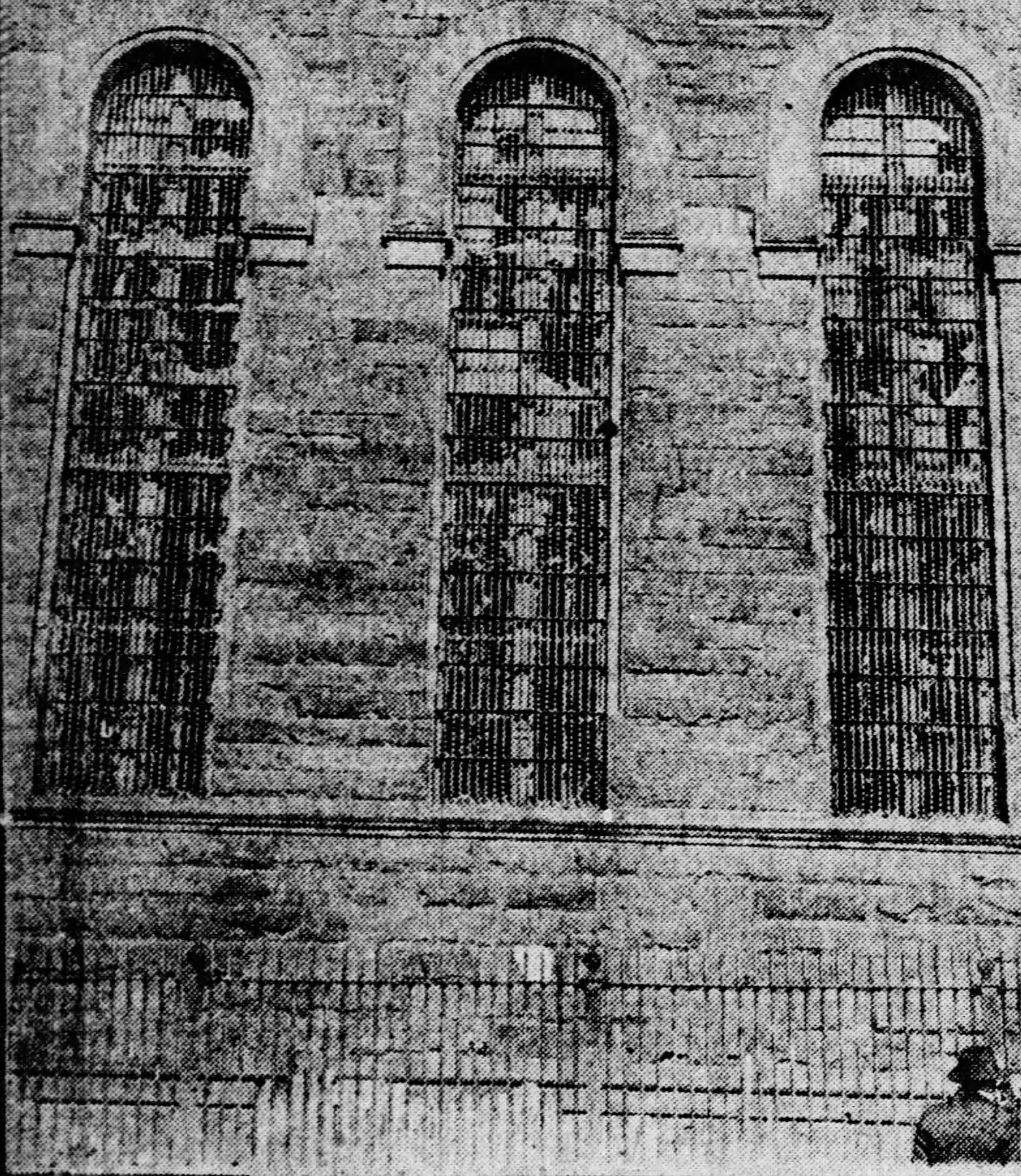
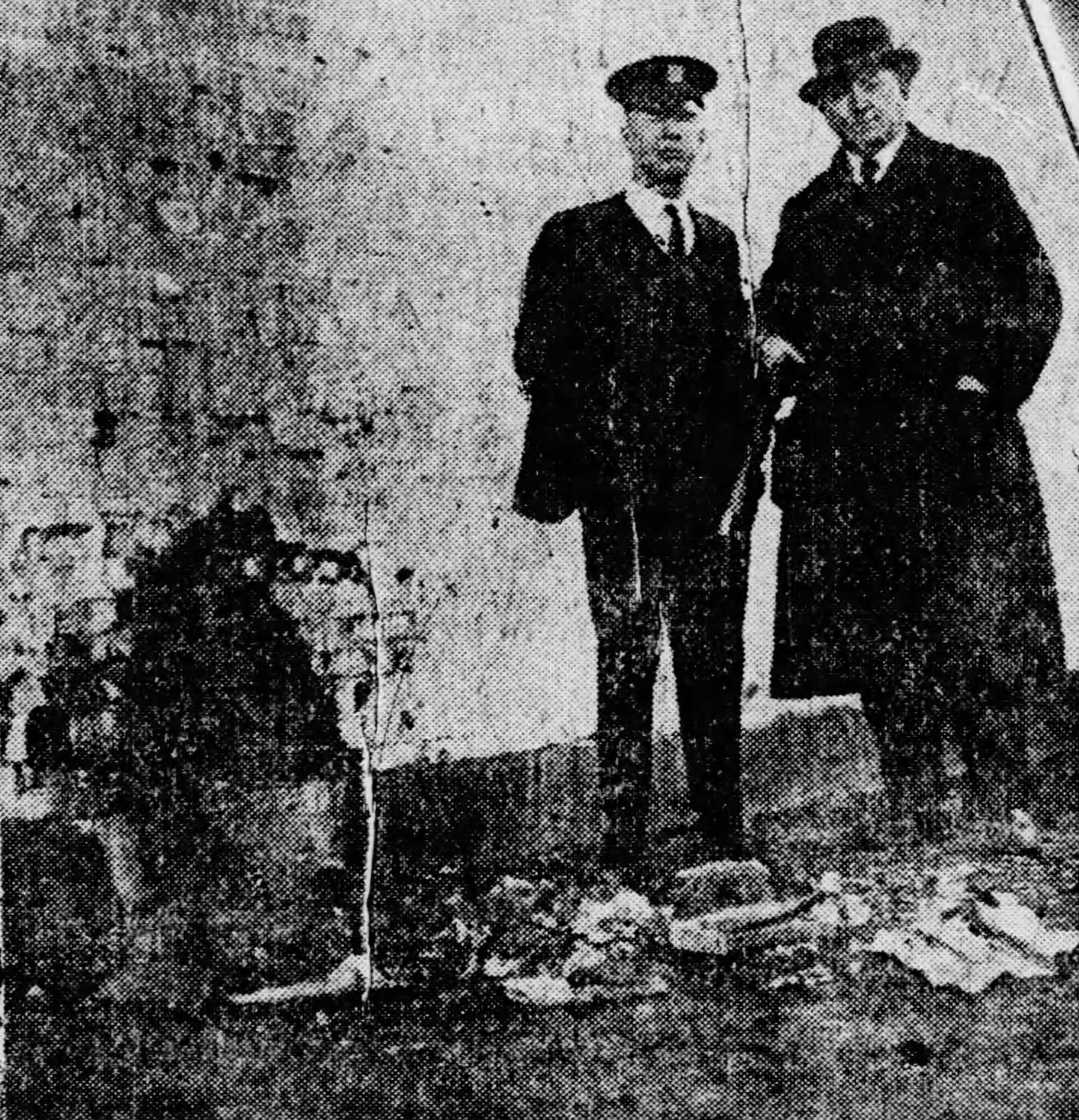
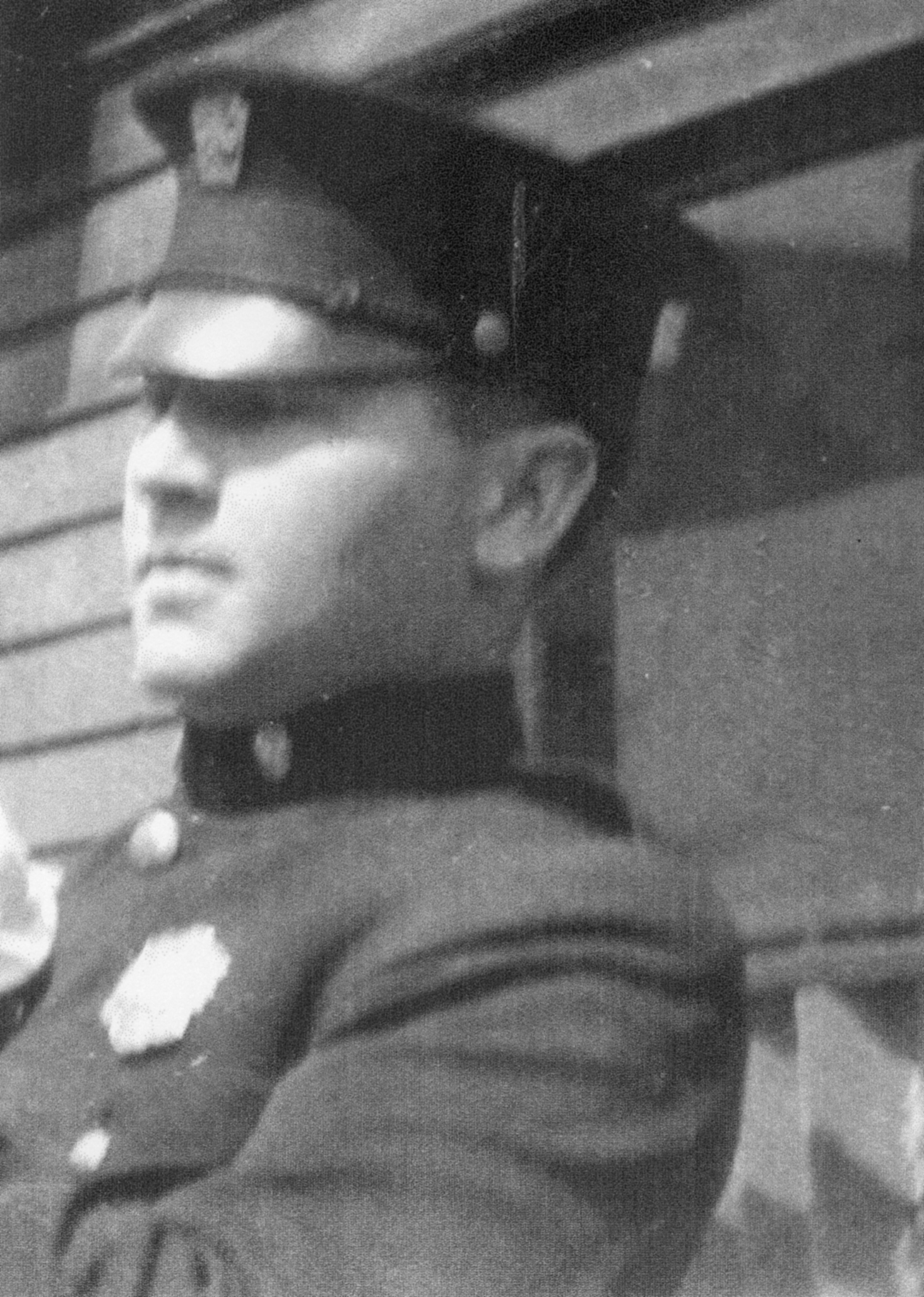
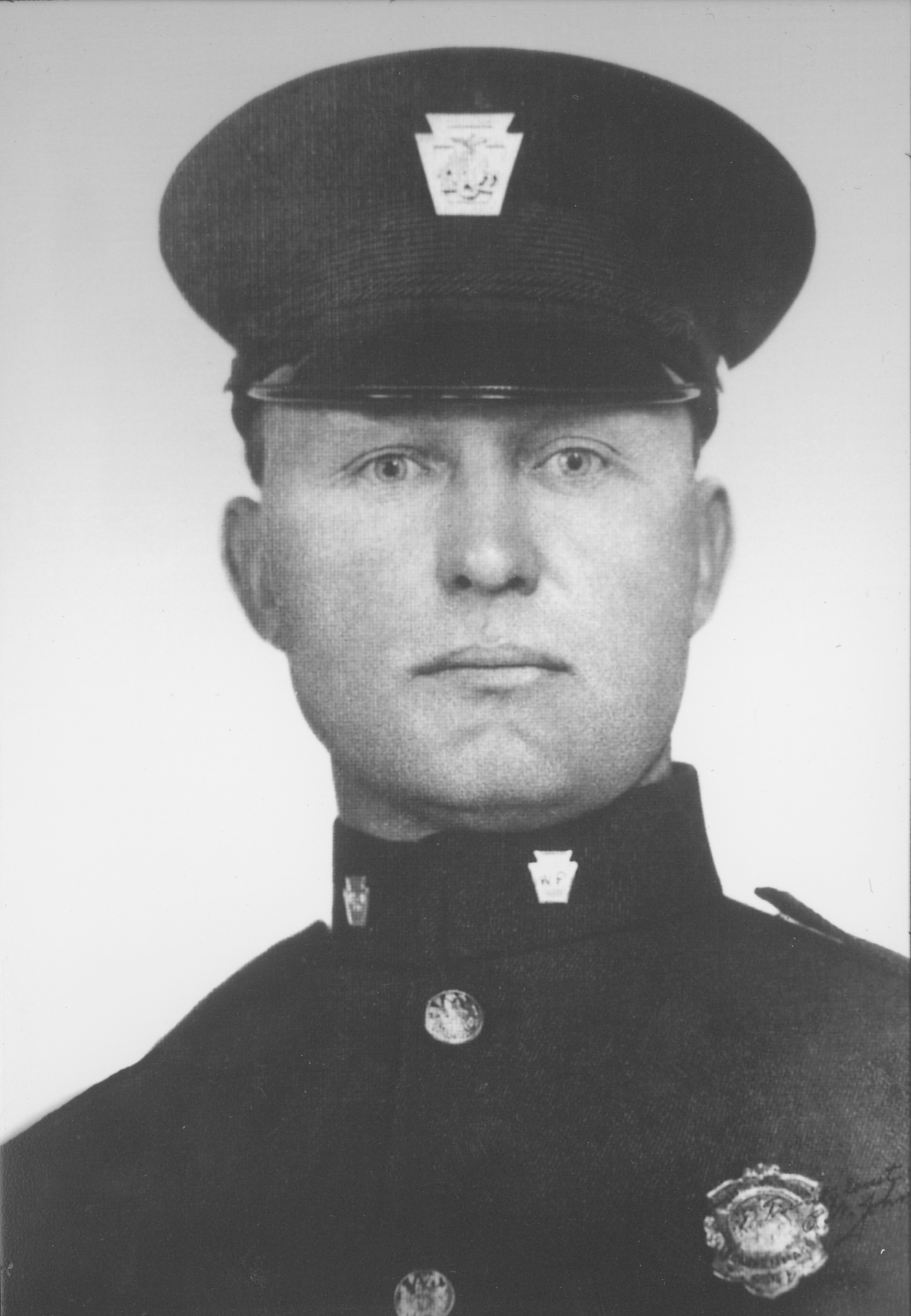

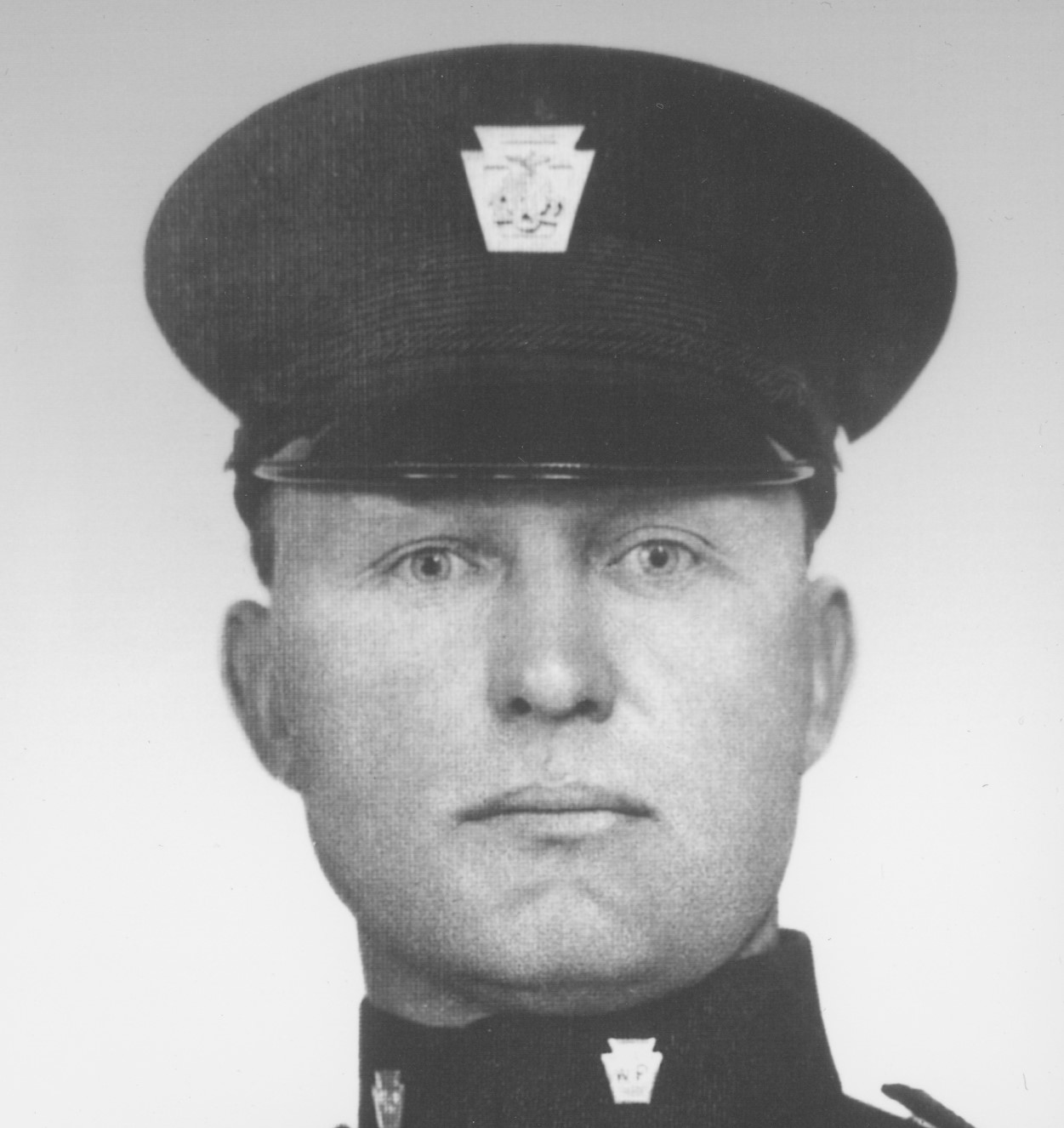
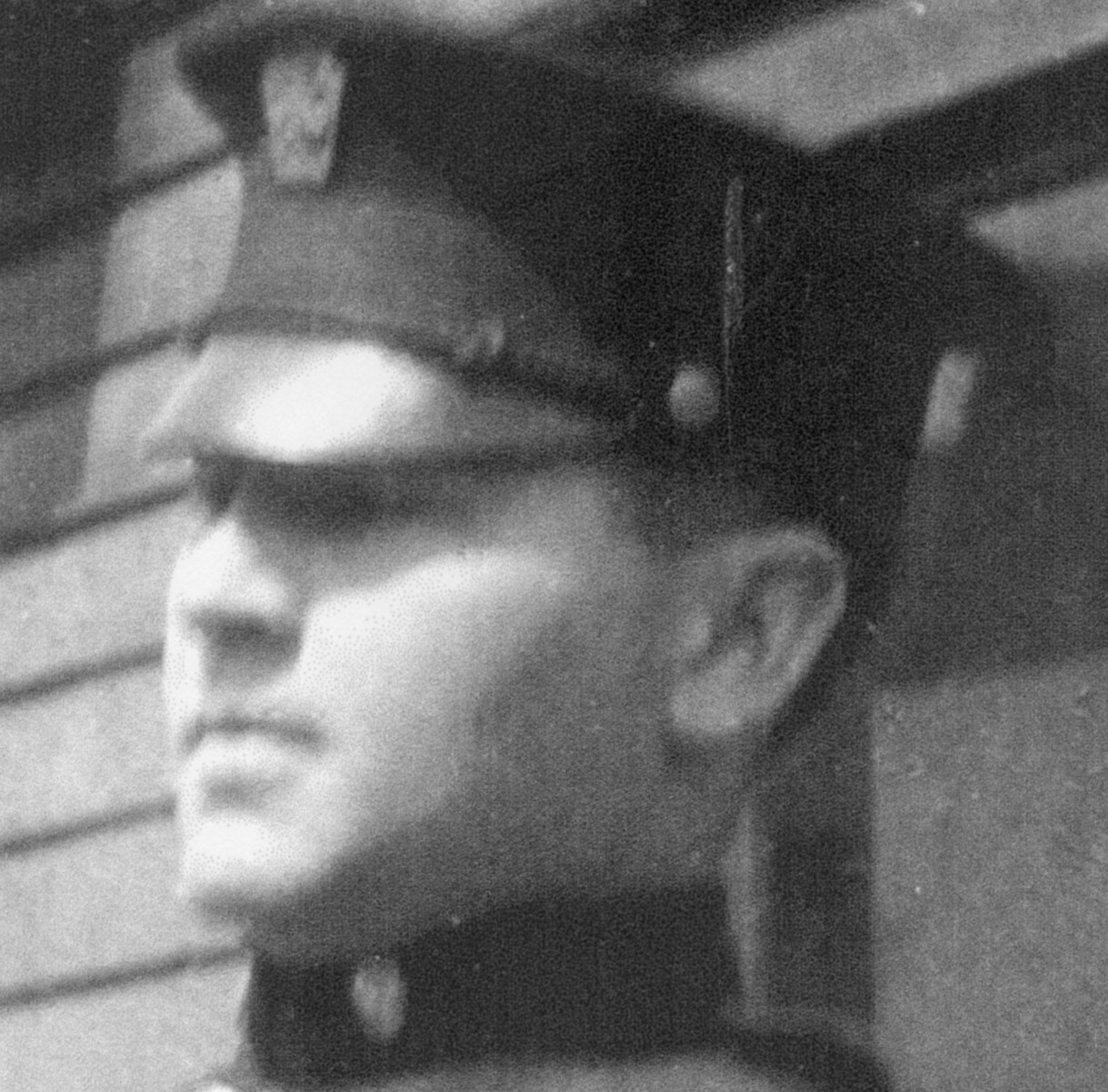
One hundred years ago, a small group of inmates tried to blast their way out of Pittsburgh’s Western Penitentiary, the now-closed prison along the Ohio River, with smuggled-in sticks of dynamite and a cache of guns that probably came in with the explosives.
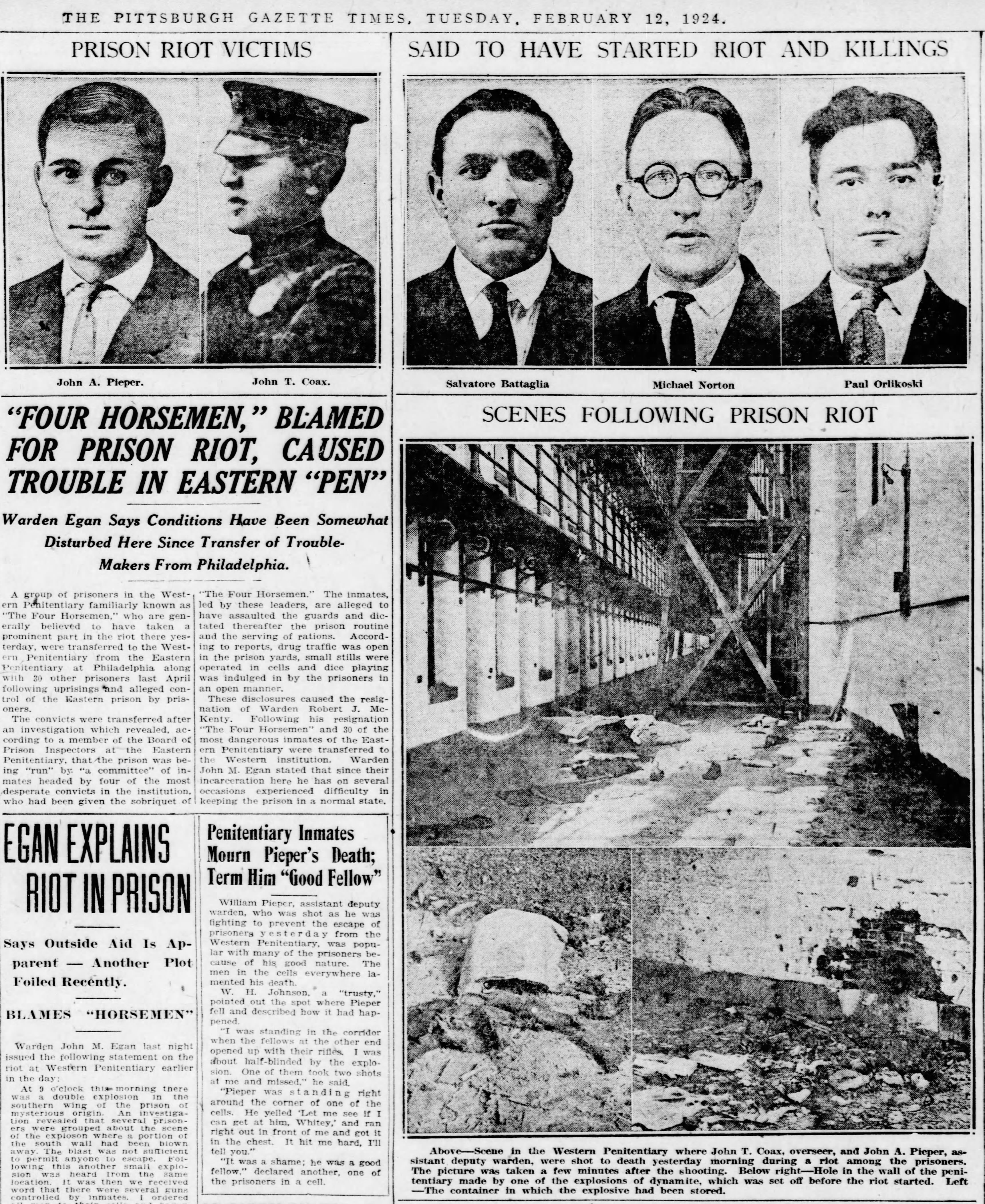
Two guards were killed in the failed escape: Assistant Warden John A. Pieper and Yard Sgt. John T. Coax.
Hundreds of law enforcement officers poured into the prison, where some tunnels and cell blocks were filled with smoke and fire. When the explosion failed to blast open the hole the would-be escapees had anticipated, they tried to shoot their way out of the prison later known as The Wall.
They gunned down Pieper and Coax and injured a half-dozen other guards and inmates, and the hours-long riot captured national headlines. The purported ringleader of the escape effort went to the electric chair for the killings two years later.
The riot and the murders — what should have been a solemn part of the prison’s storied history — were lost to history for years. For nearly 80 years, as far as anyone knew, only two guards had been killed in the prison’s history — guard Cliff Grogan in 1965 and Capt. Walter Peterson in 1973.
It took until 2003 for Coax and Pieper to be honored for their line-of-duty deaths. And Coax’s granddaughter, Julie Smith, wants to keep marking the occasion and retelling the story of the man she never met.
Call it making up for lost time.
“Yeah, you could say it was a long time coming,” Ms. Smith, of Ingram, said in an interview last week. Her tone betrayed her lingering resentment.
Ms. Smith lived with her grandmother until she was 10 but recalled her saying little about her late husband. He’d been dead for decades by then, and Ms. Smith didn’t know much of the story other than he’d been shot. She knew her grandmother was left with two children and a third on the way, and she had to take in boarders to make ends meet. There was no welfare, no victims’ compensation fund in 1924.
“I don’t remember my gram ever talking about it other than saying her happy house was turned into a sad house,” said Ms. Smith, 71.
“Fire and riot seethed through the Western penitentiary today.” - The Pittsburgh Press, evening edition, Feb. 11, 1924
The melee started with explosions — dynamite detonations meant to blast through the prison walls. There were two, one right after another, and while the wall buckled, it didn’t collapse. The men attempting to escape — exactly how many were involved has been lost to history — had no means to do so.
But the explosions did send guards running toward the sound. Reports from the time indicate that Pieper might have thought the booms were caused by sewer gas, and thus he didn’t draw his pistol as he ran.
He was confronted by armed inmates, one of whom, Paul Orlakosky, stripped him of his gun. Some reports from the time indicate Pieper confronted Orlakosky, telling him he’d never get out of the prison alive.
“The result was that Orlakosky, it is said, shot him down without further warning,” the Pittsburgh Post reported.
Pieper, an assistant warden, was 35. Attempts to reach his descendants last week were unsuccessful.
The Post reported that the men — Orlakosky, Michael Norton and Salvatore Battaglia — encountered another guard identified only as Henderson, stripped him of his gun, and forced him into a cell. One man fired at the guard, who was grazed but otherwise uninjured.
“Continuing on their way, the convicts now carrying the guns of Pieper and Henderson, sighted Coax, who was hurrying toward the scene of the explosion,” the Post reported. “He was never given a chance. Three of them opened fire on him simultaneously before he could draw his revolver.”
Different newspapers from the time offer different accounts of what exactly happened as the men were killed. The Pittsburgh Press reported that Coax was shot first while Pieper was caught in a barrage of bullets after one of the shooters became “suddenly crazed [and] emptied the other chambers of the revolver.”
Ms. Smith said her grandmother and grandfather lived on the North Side, and they could see the prison from their home.
“She heard that explosion,” Ms. Smith said of her grandmother.
Coax was 25. His teenage sister, Barbara, worked at the Pittsburgh Press at the time, she said. The newspaper rounded up any employee who knew someone at the prison and ferried them to the facility to try to get more information.
When she got there, she was taken to her brother’s body.
“She got to see him,” Ms. Smith said. “What a horrible thing that was for her.”
Ms. Smith said she wasn’t close with her great-aunt, but she recalled speaking with her
“She remembered it like it was yesterday,” Ms. Smith said. “She told me, ‘I remember it like you remember when Kennedy was shot.’”
“Six hours after the prison riot that snuffed out the lives of two guards, quiet had been restored. The ‘lifers’ were cranking their little phonographs and grinding out merry jazz tunes. A few of the short termers were either reading or writing home. Others were lying on their tiny cots, staring into space.” – The Pittsburgh Post, morning edition, Feb. 12, 1924
The riot faded from the headlines. Four men went to trial later that year in connection with the fatal shootings. One man, John Kearns, was acquitted. Norton pleaded guilty, and Battaglia was convicted of second-degree murder. Orlakowsky was given a death sentence.
He was executed in December 1926.
Ms. Smith began researching her family history in the 1990s and early 2000s. She’d known her grandfather was shot, but she’d never looked into it further.
“Old stories — they don’t mean much, but when everybody starts to be gone, you pay attention,” she said.
Newspaper clippings and other documents found their way to her as older relatives died. So she started digging.
“The whole thing was shoveled under the rug because all this dynamite got smuggled in and handguns got smuggled in,” she said, noting that reports from the time hinted that some of contraband was smuggled in by a guard who was smitten with a woman who had someone on the inside.
Indeed, the Pittsburgh Post reported Feb. 13: “Persistent rumors beginning a few hours after the riot and taking definite shape yesterday implicated a ‘mystery woman’ as the go-between who aided in smuggling the guns and dynamite to the convicts.”
One rumor, deemed “impossible to trace to its source” by the newspaper, was that one guard was paid off with “valuable beaded bags” in exchange for his help.
“Prison officials, it is known, are working on this angle. They admitted yesterday that in nearly every prison break, a woman acts as outside intermediary to arrange the escape. A ‘big-time’ criminal always has his ‘woman.’” - The Pittsburgh Post, morning edition, Feb. 13, 1924
While Ms. Smith was researching her genealogy, Jim Hollock was working as a unit manager at the prison, by that point named SCI-Pittsburgh.
He was a history buff and was working on a book about a historic Pittsburgh crime spree, so when Ms. Smith’s short letter asking for information about the 1924 riot landed at the prison, it made its way to his desk.
“Nobody knew anything about it, even me, who was interested in this stuff,” Mr. Hollock said last week.
With the blessing of his superiors, Mr. Hollock began digging into the lost piece of prison history. He decided they owed it to the families of Coax and Pieper to honor their lives.
And so in 2003, plaques honoring the men were unveiled in the prison’s entryway. They joined those honoring the other two slain guards, Grogan and Peterson. Up until then, Mr. Hollock said, “as far as we knew, only two guards had been killed in the prison’s history.”
Ms. Smith attended the ceremony, as did members of Pieper’s family. His son, Owen Pieper, told the Post-Gazette ahead of the 2003 ceremony that he believed the state and prison administration were complicit in a cover-up — an attempt to erase the riot and his father’s death from history.
Owen Pieper was 5 years old when his father was killed.
“I am happy something is being done,” he told the Post-Gazette at the time. “Even as a boy, I was well aware that no commemoration was made. I called the prison 10 or 15 years ago to discuss the riot, and they didn’t know what I was talking about.”
Mr. Hollock, at the time, offered recompense to the families of Pieper and Coax.
“It is here an apology is in order for such delayed recognition,” Mr. Hollock told the crowd gathered for the dedication of the plaques on Feb. 9, 2003. “It is easy to explain that we didn’t know. And it’s true, we didn’t. Still, we have been ignorant of our own history. We’ve been remiss, and we beg your pardon.”
Ms. Smith called it a wonderful thing — she’d written him a simple letter, she said, and he responded with the overdue honor.
“I don’t expect people will be asking much after this,” she said last week after recounting the history. Then, she mused: “But who knows, maybe in 200 years people will look back at it.”