
The misleading identitarian mindset
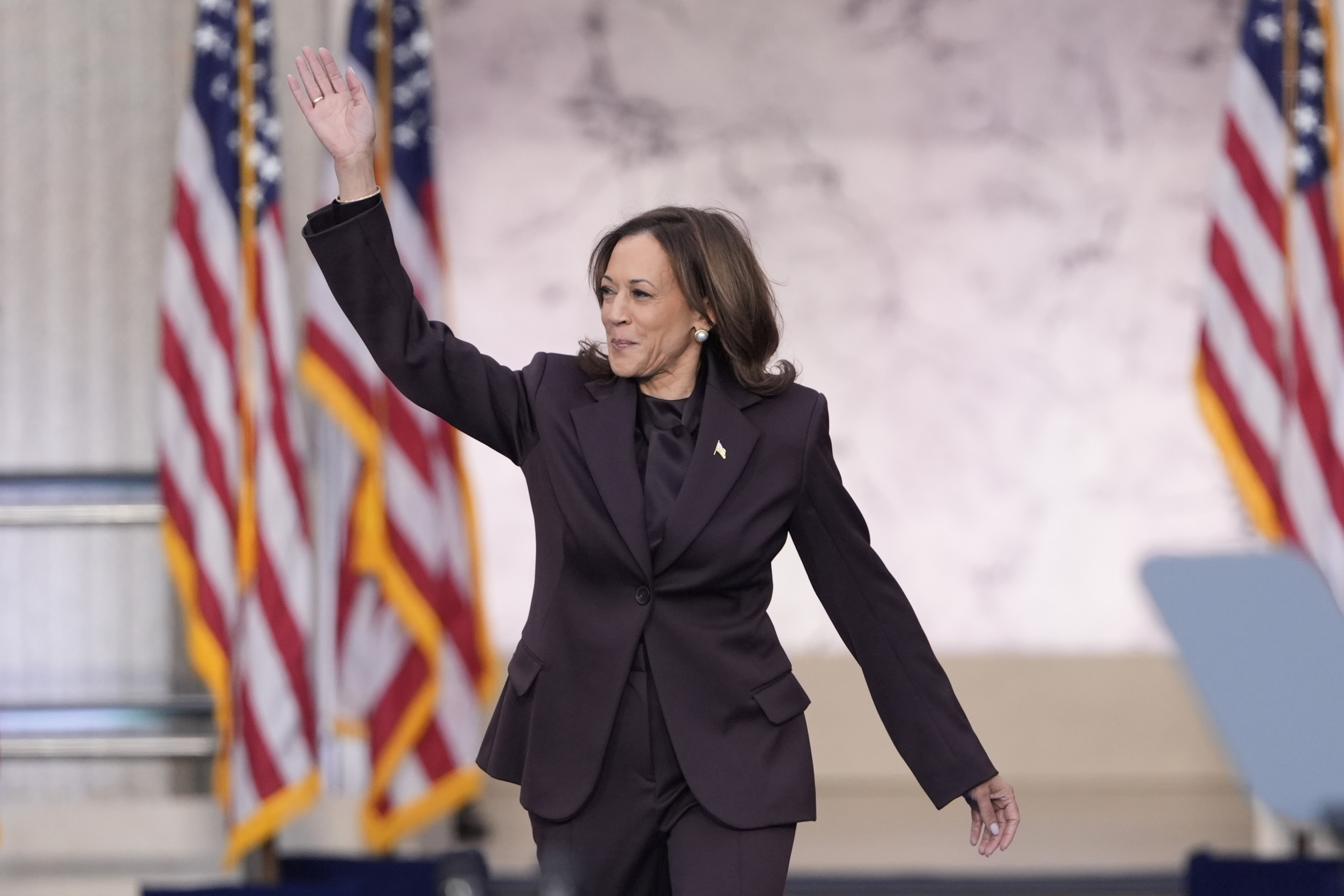
Kamala Harris did worse among Black voters than Joe Biden did in 2020. She did worse among female voters. She did much worse among Latino and young voters. She did manage to outperform Biden among two groups: affluent people and white voters, especially white men.
“Democrats,” wrote sociologist Musa al-Gharbi, “lost because everyone except for whites moved in the direction of Donald Trump this cycle.”
Wrong expectations
Why were so many of our expectations wrong? Over the past few generations, a worldview that emphasizes racial, gender and ethnic identity has been prevalent in the circles where highly educated people congregate.
The crucial assertion of the identitarian mindset is that society is divided between the privileged (straight white males) and the marginalized (pretty much everyone else). History and politics are the struggle between oppressors and oppressed groups.
In this model, people are seen as members of a group before they are seen as individuals. When Biden picked his running mate in 2020 and his Supreme Court nominee in 2022, he told us he was going to pick a Black woman before he decided who it was going to be. Identity grouping came before individual qualities.
In this model, society is seen as an agglomeration of different communities. Democrats thus produce separate agendas designed to mobilize Black men, women and so on. The goal of Democratic politics is to link all the oppressed and marginalized groups into one majority coalition.
This mindset is psychologically and morally compelling. In an individualistic age, it gives people a sense of membership in a group. It helps them organize their lives around a noble cause, fighting oppression.
But this mindset has just crashed against the rocks of reality. This model assumes that people are primarily motivated by identity group solidarity. This model assumes that the struggle against oppressive systems and groups is the central subject of politics. This model has no room for what just happened.
It turns out a lot of people don’t behave like ambassadors from this or that group. They think for themselves in unexpected ways.
It turns out that many people are concerned with all kinds of issues that don’t fit into the good-versus-evil mindset of oppressor versus oppressed: How do you fix inflation? How can we bring down crime? What should our policy on Ukraine be?
The identity politics mindset has made it harder to deal with nuts-and-bolts issues like how to address the homelessness crisis or reduce opioid deaths and how to run an institution in which people treat one another decently. Have you noticed that the places most rife with this mindset (progressive cities and elite universities) have experienced one leadership failure after another?
New models
This is a time when we all should be updating our mental models and making our view of society more complex. And I’m seeing a lot of that around me as people try to learn from what just happened.
But I’m also seeing many people who are still so imprisoned by their mental models, they can interpret these results only in identity politics terms: Harris lost because America is racist (even though she did virtually the same as Biden did among white voters).
Harris lost because America is sexist (even though she underperformed among women). Some people blamed white women for abandoning their Black sisters, as if lack of gender solidarity were the main thing going on here.
As I try to update my own models, a few thoughts enter my mind. First, you don’t reduce racial, ethnic and gender bigotry by raising the salience of these categories and by exaggerating the differences between groups. Second, integration is better than separatism. Diverse societies prosper when people in different categories cooperate in respectful ways on a day-to-day basis, not when we divide people into supposedly homogeneous enclaves.
Third, assimilation is not a dirty word, as long as it’s voluntary. It’s not a sin to feel that your love for America transcends your love for your ethnic group, and you don’t really love America if you despise half its people. Fourth, most of the world’s problems are caused by stupidity and human limitation, not because there’s some malevolently brilliant group of oppressors keeping everybody else down.
Fifth, seeing groups in all their complexity requires seeing individuals in all their complexity. To see people well, you have to see what makes them unique. You also have to see which groups they belong to.
You also have to see their social location — where they fit in the economic, social and status hierarchies. When you’re able to see people at all three levels of reality, you’re beginning to see them holistically.
A new social vision
Finally, we need a social vision that doesn’t rely on zero-sum us/them thinking. During his first term, Trump unleashed a cultural assault based on his version of identity politics. The left responded by doubling down on its identitarian mindset. We have to do better this time.
In 1959 British jurist Patrick Devlin wrote: “Without shared ideas on politics, morals and ethics, no society can exist.” We need a social vision that is as morally compelling as identity politics but does a better job of describing reality. We need a national narrative that points us to some ideal and gives each of us a noble role in pursuing it.
David Brooks is a columnist for the New York Times.