
Housing affordability remains a problem, with no easy fixes
The cost of living remains an important economic issue, as reflected in election results earlier this month.
One key concern is the cost of housing. The combination of big increases in house prices and much higher mortgage rates since the pandemic has many young people concerned that homeownership is out of reach.
The Trump administration has floated the idea of a 50-year mortgage that could reduce monthly payments and perhaps make purchasing a home more affordable. But there are no easy fixes to the nationwide problem of housing affordability.
The good news is that housing is more affordable, relative to incomes, in the Pittsburgh area than it is nationally.
According to a recent survey from Florida Atlantic University, 48% of Americans are very concerned about housing affordability, with 32% somewhat concerned. Two major factors have led to a big drop in housing affordability since the pandemic.
First, there has been a rapid increase in house prices in recent years. From May 2020 to September 2025, the median sale price of an existing home has increased from $278,000 to $421,000, according to the National Association of Realtors.
But it’s not just the increase in house prices, it’s also much higher mortgage costs. In late 2020 and early 2021, the typical 30-year fixed mortgage rate was below 3%, according to Freddie Mac, as the Federal Reserve pushed down borrowing costs in a successful attempt to support an economic recovery. But as inflation picked up and the economy recovered, the Fed ended its extraordinary efforts to lower long-term interest rates in the economy, including mortgage rates, and then started to unwind these efforts.
In addition, expectations for large federal government budget deficits well into the future have also put upward pressure on long-term rates. As a result, the typical 30-year fixed mortgage rate hit 7.6% in late 2023, the highest mortgage rate in more than 20 years (see Chart 1). Mortgage rates have come down somewhat since then, to 6.2% in early November, but this is still far above the average of 4.8% over the past 20 years.
Housing affordability has plummeted as a result of big price increases and higher mortgage rates. The National Association of Realtors produces a monthly housing affordability index that takes into account the median sale price for an existing home, mortgage rates and median household income (one-half of households earn more, one-half earn less).
As of September, a household earning the median income could afford a home priced at 105% of the median national sale price at the current mortgage rate. Although this is up from just 95% in June, it is still close to the lowest affordability in 20 years. In every year from 2008 to 2021, a household earning the median income could afford a home costing at least 135% of the median sale price.
Affordability is a particular problem for first-time homebuyers. According to the NAR, first-time homebuyers made up just 21% of the market in 2024, a record low.
And with very low affordability, it is taking longer to purchase a home: The median age of a first-time buyer last year was 40, a record high and up from 38 in 2023.
A big part of the problem is that inventories of homes for sale remain tight, putting upward pressure on prices.
Many households bought homes or refinanced their mortgages a few years ago, when mortgage rates were extremely low. Given that, they are reluctant to move because that would mean much higher monthly payments.
In addition, the number of new single-family homes built over the past 20 years, following the housing market crash, has been much lower than in previous decades, even as the population has continued to increase (see Chart 2). This lack of supply has kept home prices elevated, even with high mortgage rates.
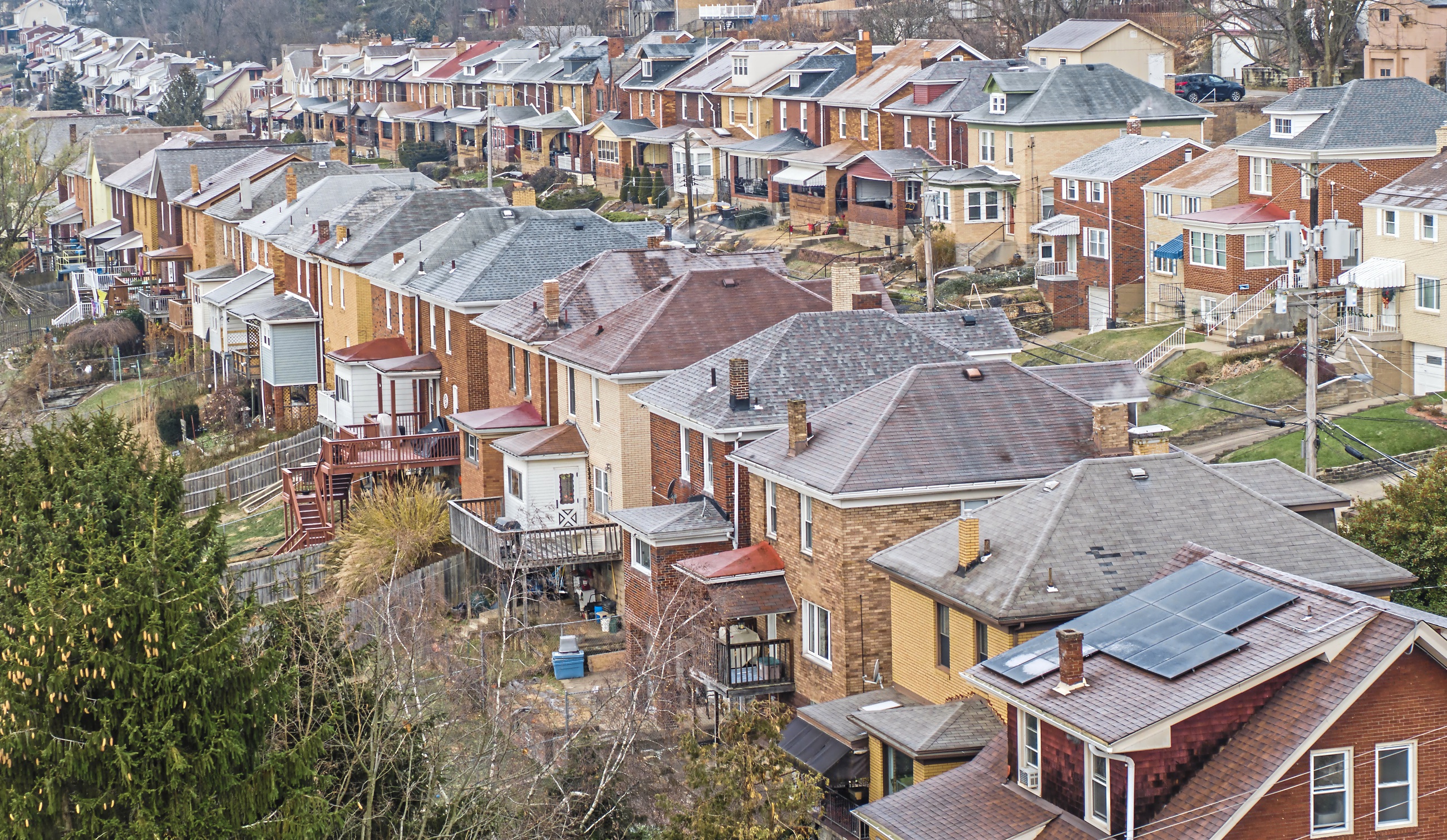
The situation isn’t as bad locally as it is in the rest of the country. According to Realtor.com, greater Pittsburgh has the most affordable housing, relative to income, among major U.S. metropolitan areas.
The median list price for an existing home in the Pittsburgh metro area is around $250,000, compared to above $400,000 nationally. A local household earning the median income can afford more than one-half of the homes for sale in greater Pittsburgh, the only major metropolitan area where that is the case.
But even in Pittsburgh, affordability has tumbled over the past few years as mortgage rates and prices have moved higher.
There are no easy solutions to the housing affordability problem, particularly at the national level.
For one, housing policy is very localized, with municipalities largely responsible for authorizing construction. Tariffs are raising costs for building materials, and restrictions on immigration could reduce the supply of construction workers needed to build new homes.
Lower mortgage rates could help with affordability, and might also encourage more people to put their current homes on the market.
But they would also lead to stronger house price growth, offsetting much of the benefit.
By law, the Federal Reserve is supposed to look at the broader economy in setting interest rates, not the housing market, and lower interest rates could stoke a reacceleration in inflation. It will take building more homes to truly improve housing affordability, and a surge in residential construction does not appear imminent.
Households may also need to reset their expectations.
From 2009 to 2021, mortgage rates were well below their longer-run average, due to the Great Recession, then a slow economic recovery and finally the pandemic.
Although a 6% mortgage rate seems high compared to the past 20 years, it is actually slightly below its average over the past 40 years. A combination of more homebuilding and more distance from the pandemic-distorted housing market should be enough to gradually restore housing affordability.
Gus Faucher is senior vice president and chief economist of The PNC Financial Services Group. He shares his insights on the regional economy each month.