
FETTERMAN PACs GET HELP FROM GOP DONORS

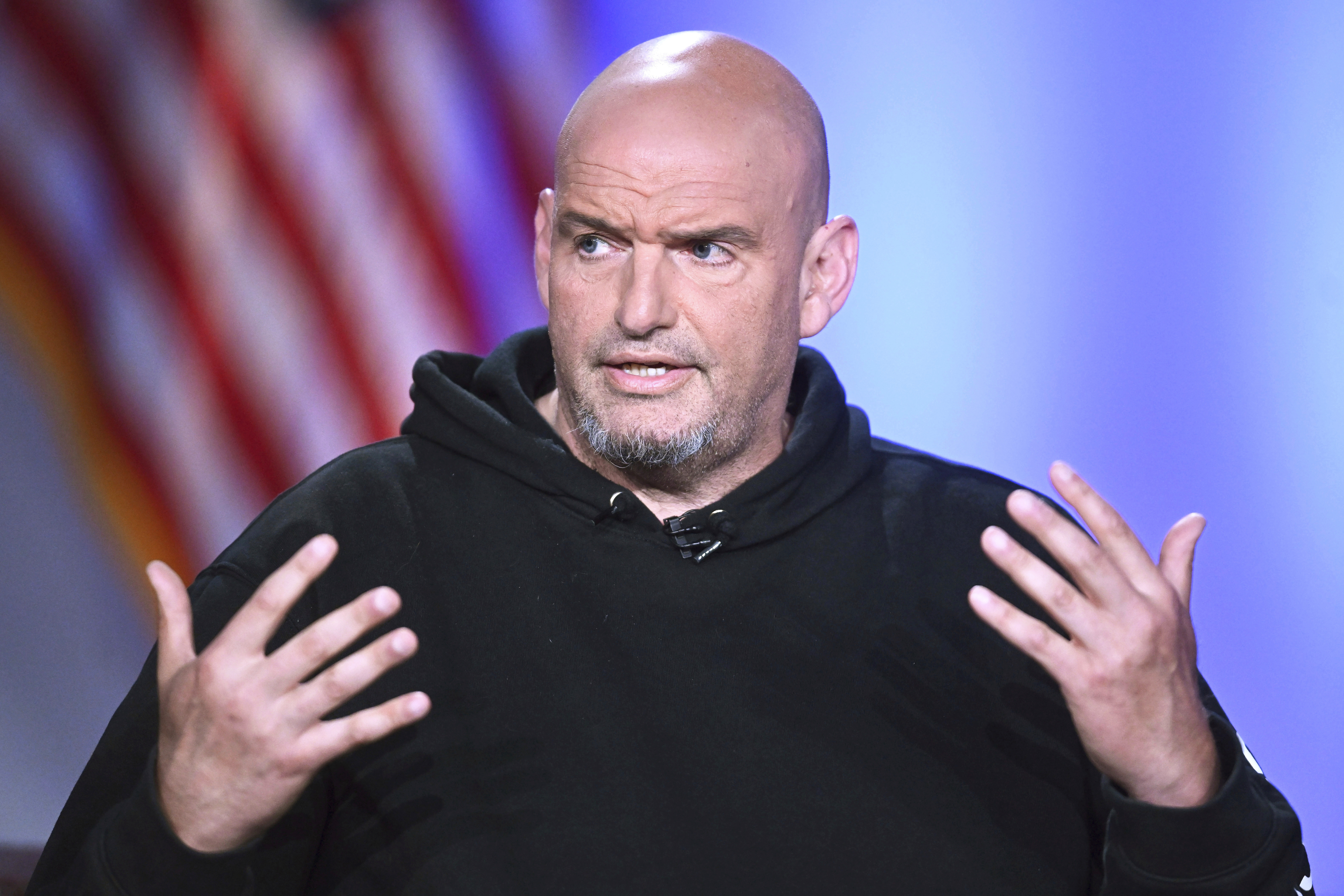
WASHINGTON — Ed Glazer, the billionaire owner of the Tampa Bay Buccaneers, cut more than a few sizable checks to politicians in recent years.
Repeated $44,300 donations to the Republican National Committee. Another $41,300 to help the GOP keep control of the U.S. House in the last election. An undisclosed contribution to President Donald Trump’s new White House ballroom.
Two donations, though, stood out among the rest — $22,000 and $5,000 to a pair of political action committees run by U.S. Sen. John Fetterman.
Mr. Glazer was among a few GOP donors who stepped in to boost the Pennsylvania Democrat’s fundraising efforts last year as his donations and approvals among members of his own party — some of whom became increasingly frustrated with his positions — took a sharp turn.
Mr. Fetterman’s fundraising slip started at the beginning of 2025, raising questions about his desire or ability to run for a second term in 2028. By the end of the year, the $1.6 million he raised for his main campaign organization was less than half the previous annual totals, new public disclosures show.
But the donations from Mr. Glazer and others — including several from PACs associated with corporations and special interests — also created a record or near-record year for two other smaller PACs that help fuel the campaigns of Mr. Fetterman and his fellow Democrats, according to a Post-Gazette review of the disclosures.
Some of the donors, aside from their support of Mr. Fetterman, were otherwise exclusively contributing large sums to Republicans — including in a way that aimed to keep Mr. Fetterman’s party in the minority on Capitol Hill, the Post-Gazette found.
Mr. Glazer, for instance, spent $466,000 on campaign donations in 2025, all to Republican committees except for those to support Mr. Fetterman.
Matthew Ocko, an investor, gave $24,500 across all three of Mr. Fetterman’s PACs while donating a total of $740,000 to Republicans. Hilary Luros, general counsel for the investment group Archimedes Capital, gave the same amount to the Fetterman PACs while donating a total of nearly $269,000, including to the National Republican Senate Committee.
It’s difficult to pinpoint wealthy donors’ reasons for giving to politicians, said Lew Irwin, a political science professor at Duquesne University. Access and influence can often play a role, he said.
For Mr. Fetterman — who sits for regular Fox News interviews and has seen his support among Pennsylvania Republican voters surpass his approval from Democrats in recent polls — the GOP donors raise more questions. They could be giving in response to his positions on specific issues, or maybe they appreciate his friendly working relationship with Pennsylvania’s other senator, Republican Dave McCormick, Mr. Irwin said.
Combined with his other lagging fundraising efforts, the donations also further feed questions about what Mr. Fetterman’s plans are as his re-election year quickly approaches, Mr. Irwin said.
“I would imagine that the Republicans are bending Fetterman’s ear just about every day asking him if he wants to switch parties,” he said.
Mr. Fetterman has rejected the idea he would leave the Democratic Party. He’s said repeatedly that Pennsylvania’s role as a preeminent swing state means he must work with, and not demonize, the opposition.
He’s earned some high-profile detractors along the way. Larry Krasner, the Democratic Philadelphia district attorney, said in a recent CNN interview that Mr. Fetterman was “the favorite Democratic senator of Donald Trump” and had “completely sold out the principles on which he ran for office.”
Those comments followed Mr. Fetterman’s continued support for Immigration and Customs Enforcement actions amid massive public outcries, and of his criticism of Mr. Krasner comparing ICE agents to Nazis.
After the CNN interview, Mr. Fetterman said on Fox News that Mr. Krasner should “lighten up.”
Some of the newer donors to Mr. Fetterman’s PACs have come amid similar moments. Mr. Glazer’s donations were listed in late October when Mr. Fetterman was voting consistently with Republicans during the six-week government shutdown.
Others occurred earlier, or they came from people whose first federal donations on record were four- or five-figure contributions to Mr. Fetterman. Some individuals who had a history of donating to both parties had also donated to Mr. Fetterman in previous years.
But the small influx of new donors meant both of Mr. Fetterman’s secondary PACs saw a bump or kept pace compared to previous years.
Fetterman Victory Fund, a joint-fundraising committee that was set up to also benefit the Pennsylvania Democratic Party, raised about $164,000 in 2025 — about $40,000 more than the previous year and $110,000 more than 2023.
Every Vote PAC, a so-called leadership PAC, raised another $125,500 after pulling in about the same in 2024 and less than half that amount in 2023.
The use of those organizations in addition to Mr. Fetterman’s main candidate PAC — Fetterman for PA — is not unusual for members of Congress, though good government advocates have argued they allow candidates to skirt the legal contribution limits. For example, six of the 12 donors to Fetterman Victory Fund in 2025 also gave maximum $7,000 contributions to Fetterman for PA at the same time, records show.
In fact, almost all of the donors to Fetterman Victory Fund in 2025 also gave to Every Vote PAC. The latter also collected several donations from PACs associated with corporations and special interests such as Comcast, Verizon, Eli Lilly, Elevance Health, American Trucking Associations and unions for airline pilots and air traffic controllers.
There are additional rules on how those PACs can be used. But funds also sometimes end up mixing with the candidate’s other accounts.
When Mr. Fetterman was on the ballot in 2022, his joint-fundraising committee with Pennsylvania Democrats spent $4.5 million. Some of that, $1.3 million, went to Fetterman for PA. Most, $2.6 million, went to the Pennsylvania Democratic Party.
Since he’s been in office, $256,000 of the $310,000 that Fetterman Victory Fund has spent has gone back to Fetterman for PA or Every Vote PAC, with only $15,500 going to Pennsylvania Democrats. (Mr. Fetterman has assisted the party with Fetterman for PA as well, including for the competitive Pennsylvania Supreme Court retention races last fall.)
Leadership PACs are often used primarily to help allies once federal officials enter office. Mr. Fetterman’s Every Vote PAC has spent most of its money on contributions, including $25,000 to the Democratic Senate Campaign Committee — which aims to win the Senate majority — $10,000 for then-U.S. Sen. Bob Casey’s losing re-election campaign in 2024 and other competitive Democrats in Ohio and Nevada.
U.S. Rep. Chris Deluzio, D-Fox Chapel, has a leadership PAC that has similarly assisted Democratic allies. Called the Yinzer PAC, its $95,000 in expenses in 2025 included $15,000 to the Democratic Congressional Campaign Committee and $1,000 to $2,500 contributions to Democratic House candidates.
Mr. Deluzio’s main campaign organization, meanwhile, saw a spike in donations in the last three months of 2025 — a period that included a high-profile national moment when Trump used threatening language toward him and five other Democrats. New disclosures show Mr. Deluzio pulled in $597,000 after raising $416,000 in the previous quarter.
Mr. Fetterman’s quarterly fundraising for his main PAC totaled $360,000 — about $30,000 more than the previous three months, but still his second-lowest quarter since entering office.
His donations from small-dollar donors, often a sign of grassroots support from voters, dropped to $61,000 from a high of more than 10 times that amount one year earlier. He continued to have more than $1.9 million cash on hand at the end of the year.
Mr. Fetterman’s campaign and congressional staff did not return a request for comment from the Post-Gazette about the donations or use of his PACs in 2025.
Mr. Irwin, of Duquesne University, said the shift is another indicator Mr. Fetterman may be considering not running for another six-year term.
“We’re in 2026 now,” Mr. Irwin said. “Senators, they’re typically raising money through the entire cycle. But they have to get serious about that in the last couple years… Think about the tens of millions of dollars it takes in Pennsylvania to win a credible Senate race.”