
TEEN PRESSURE TEST



The kids want to be all right.
They are bored. They want to be with their friends — with the people they feel safest with. They want to be outside while the weather is nice. They want to go to the pool when it’s hot.
“We’re just kids trying to have fun.”
But they’re also angry, and they’re stressed. They feel the pressure of high expectations and the stress of the current state of the world. They have emotions they feel like they’re expected to bottle up, and in some cases, they’re taking on the stress and trauma of their parents or guardians, too.
“Everything is so real.”
So-called “teen takeovers” — the act of young people coordinated via social media and gathering en masse in public, and a term that many say invites a negative connotation from the start — have drawn attention in cities across the country since early spring.
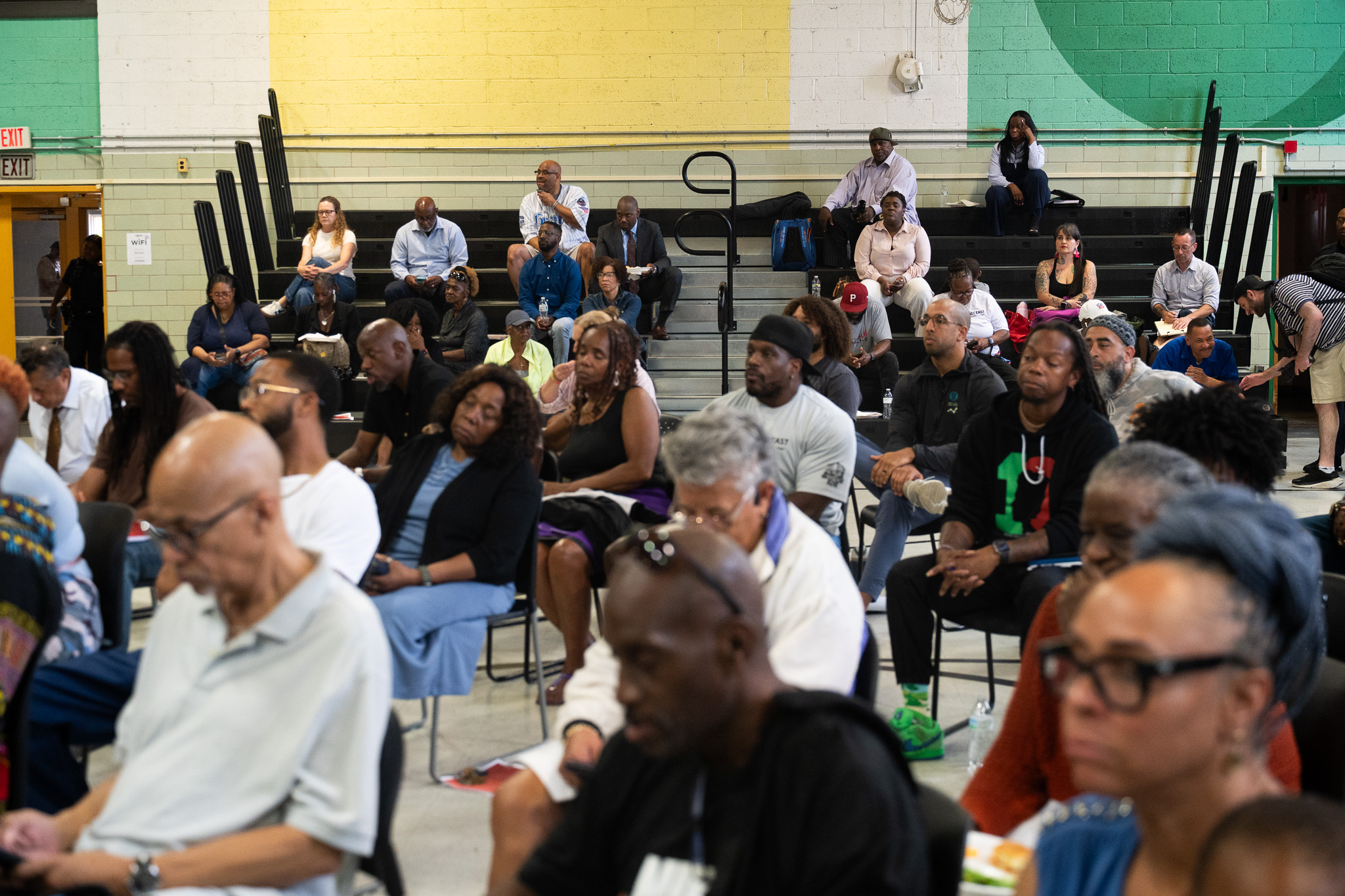
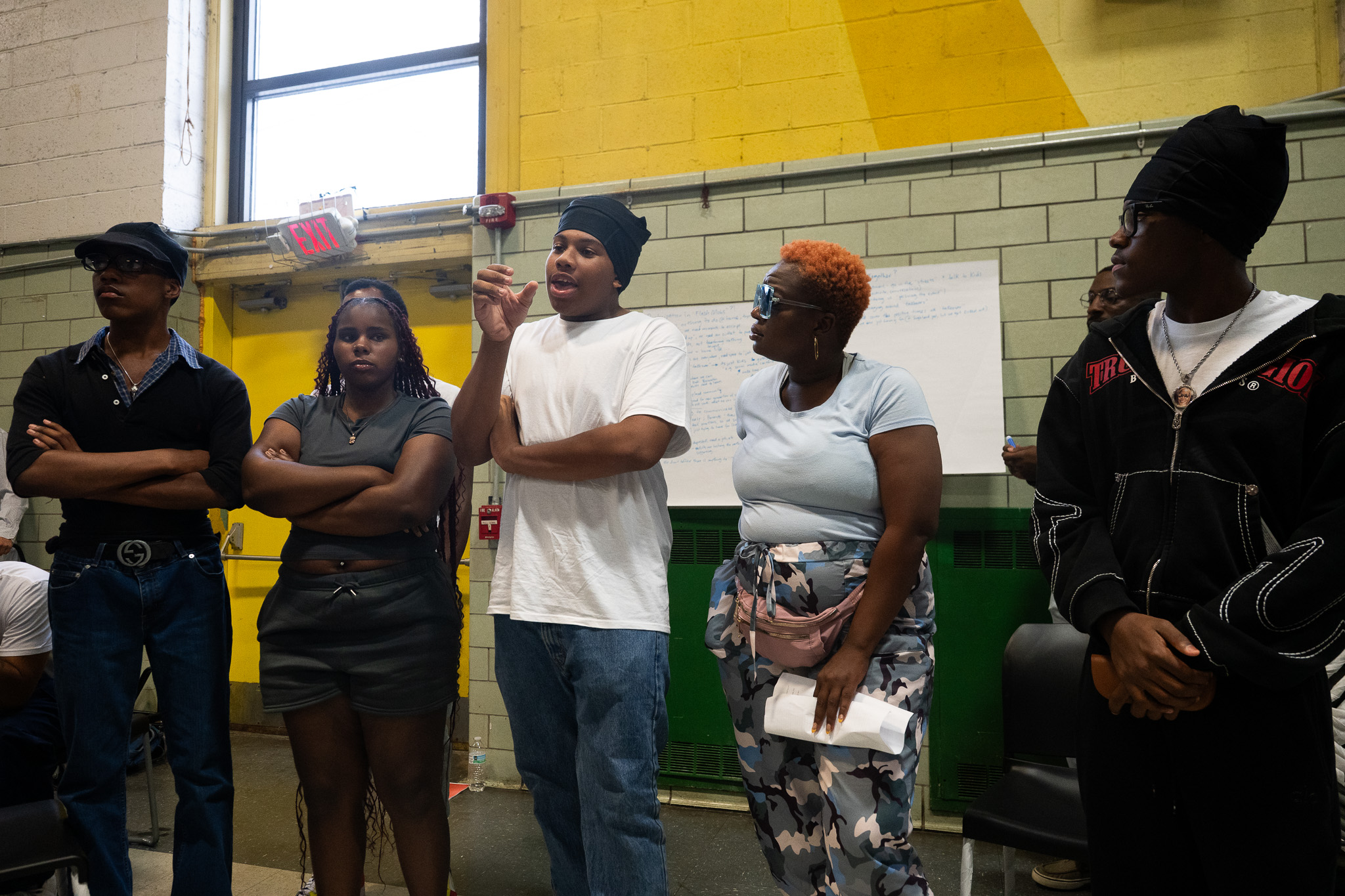
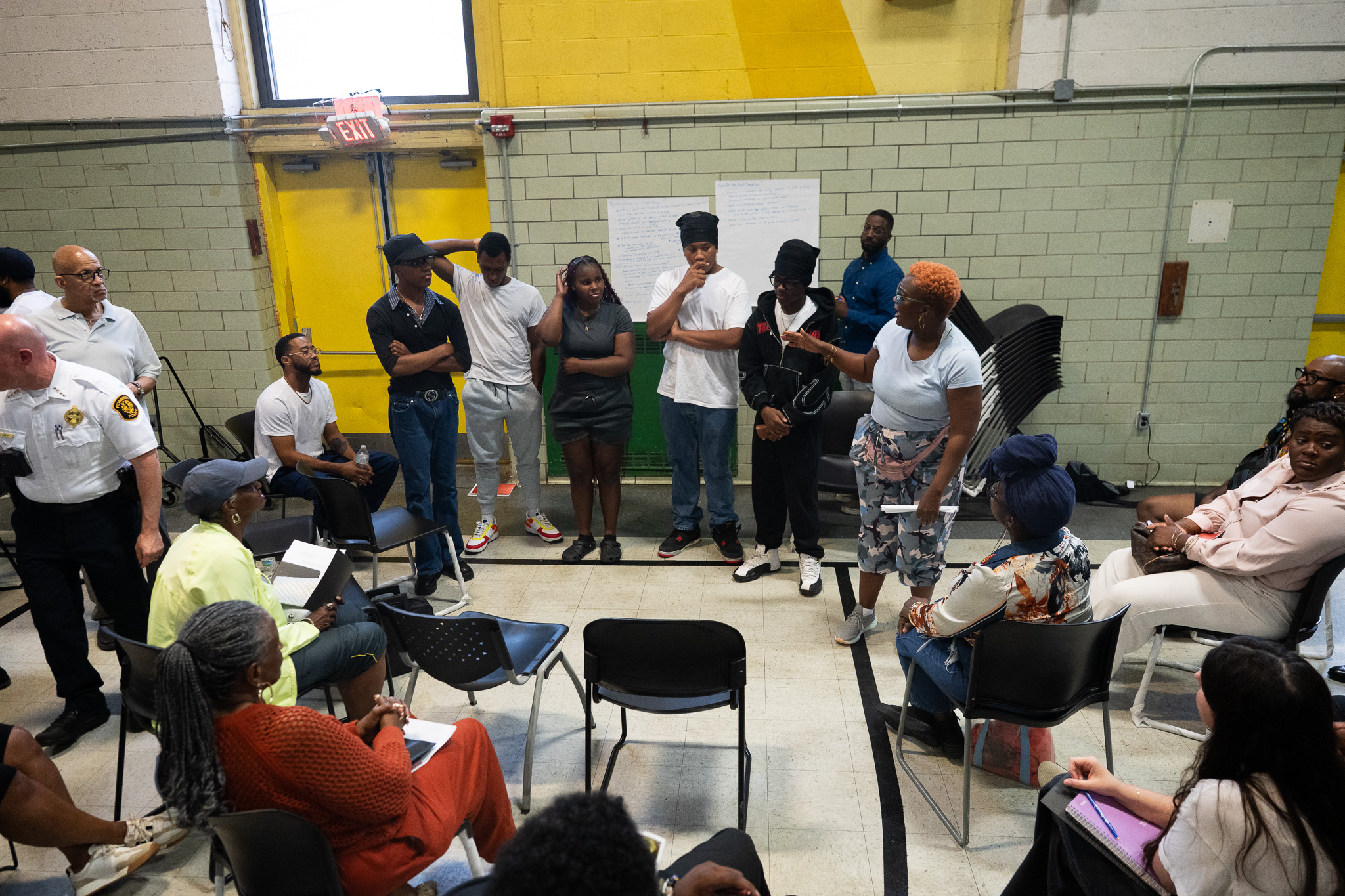
Where the adults — parents, police, city leaders — see disorder and chaos, the kids say they see group gatherings that give them a chance to just be in public with their peers. And they say they feel left out of the conversations about the situation even though the talking points are centered squarely on them.
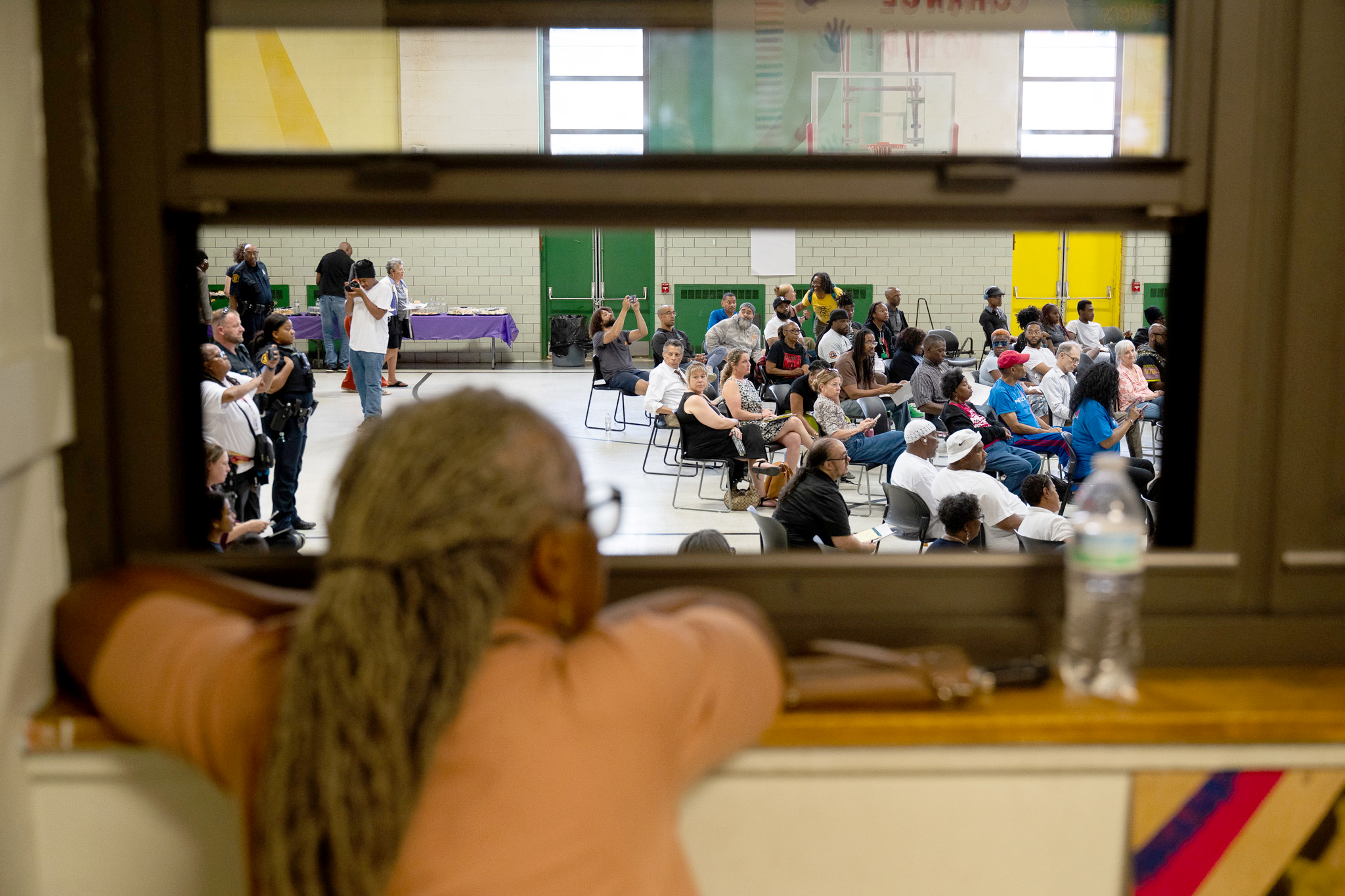
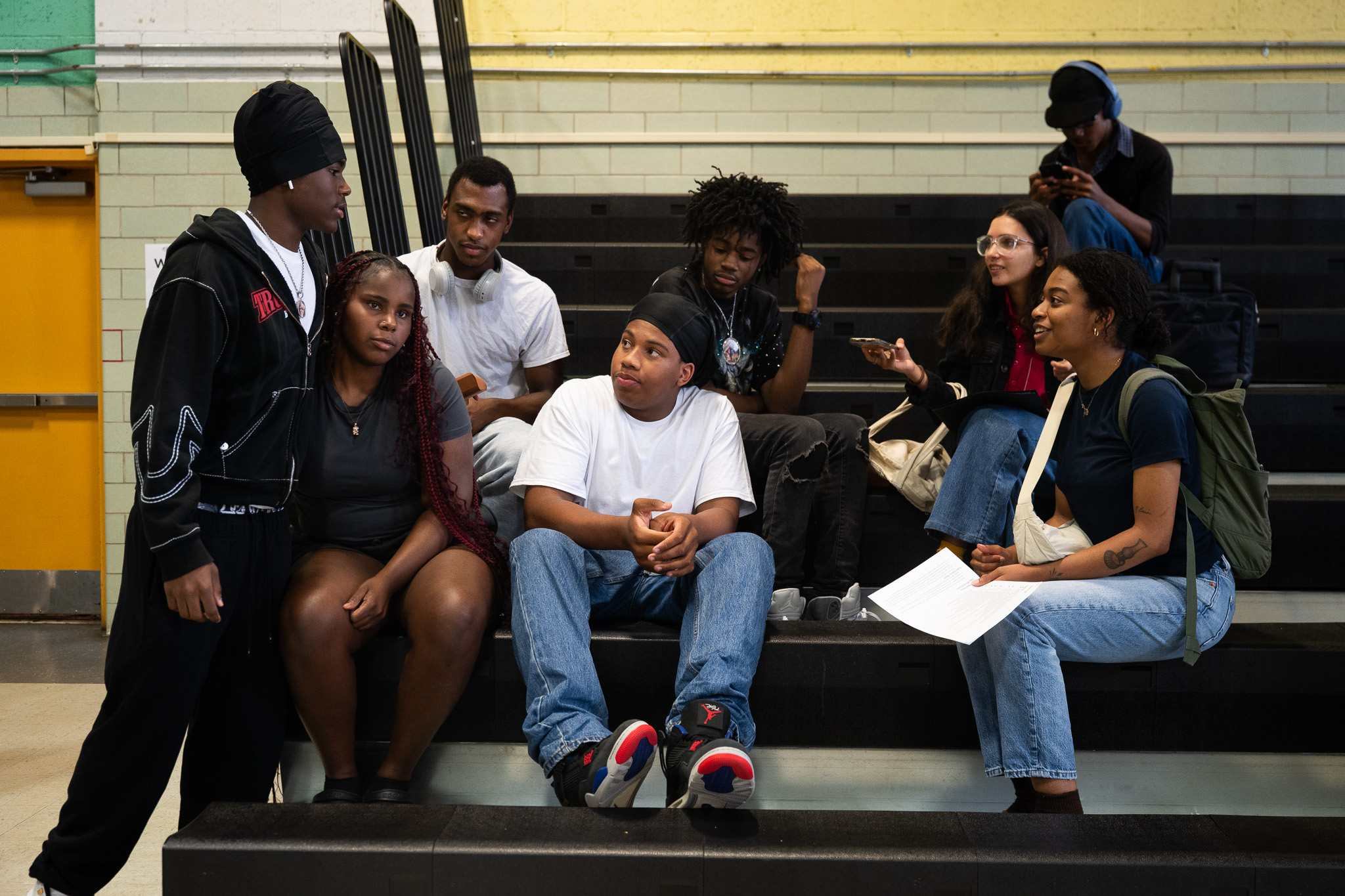
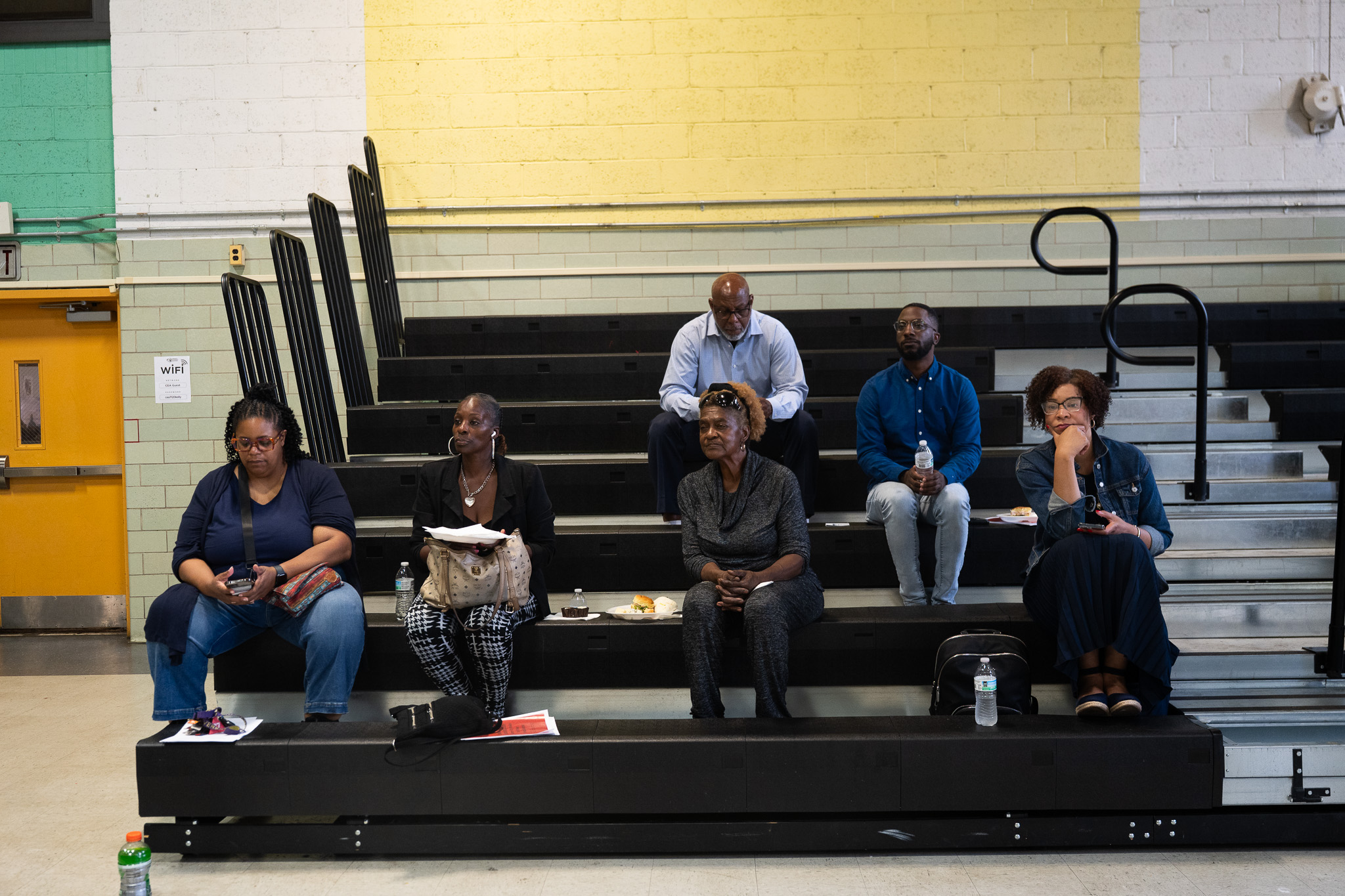
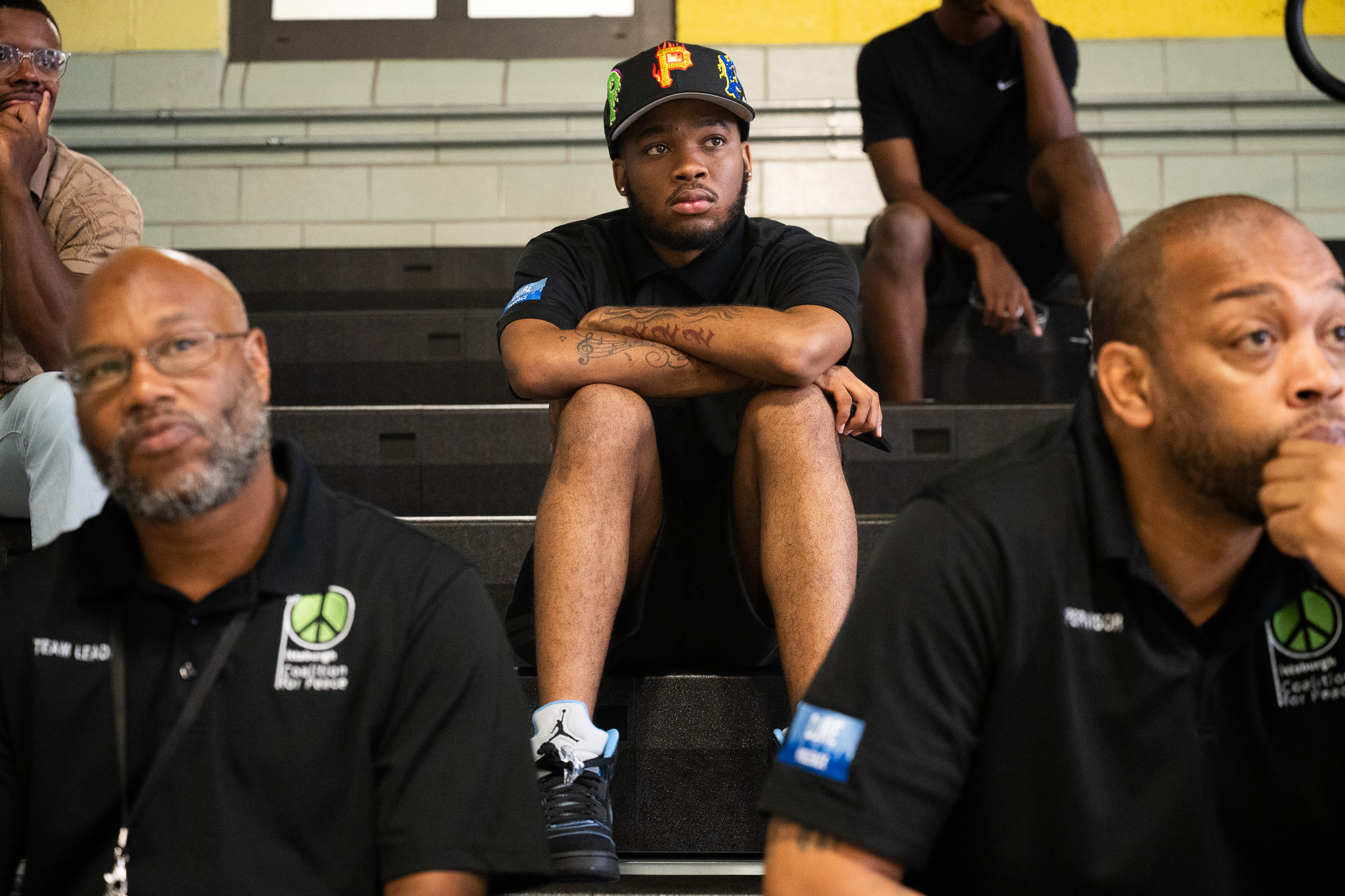
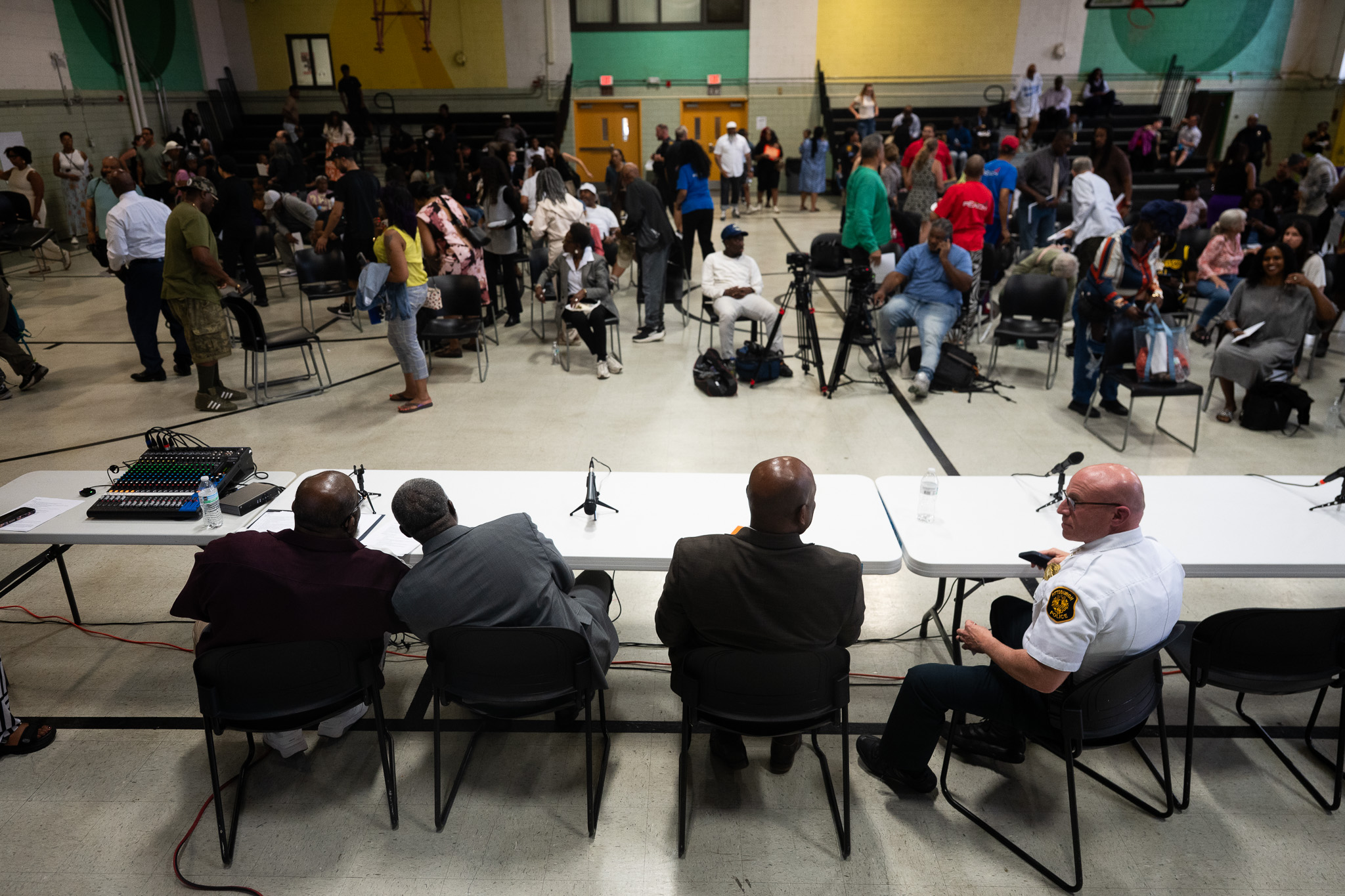
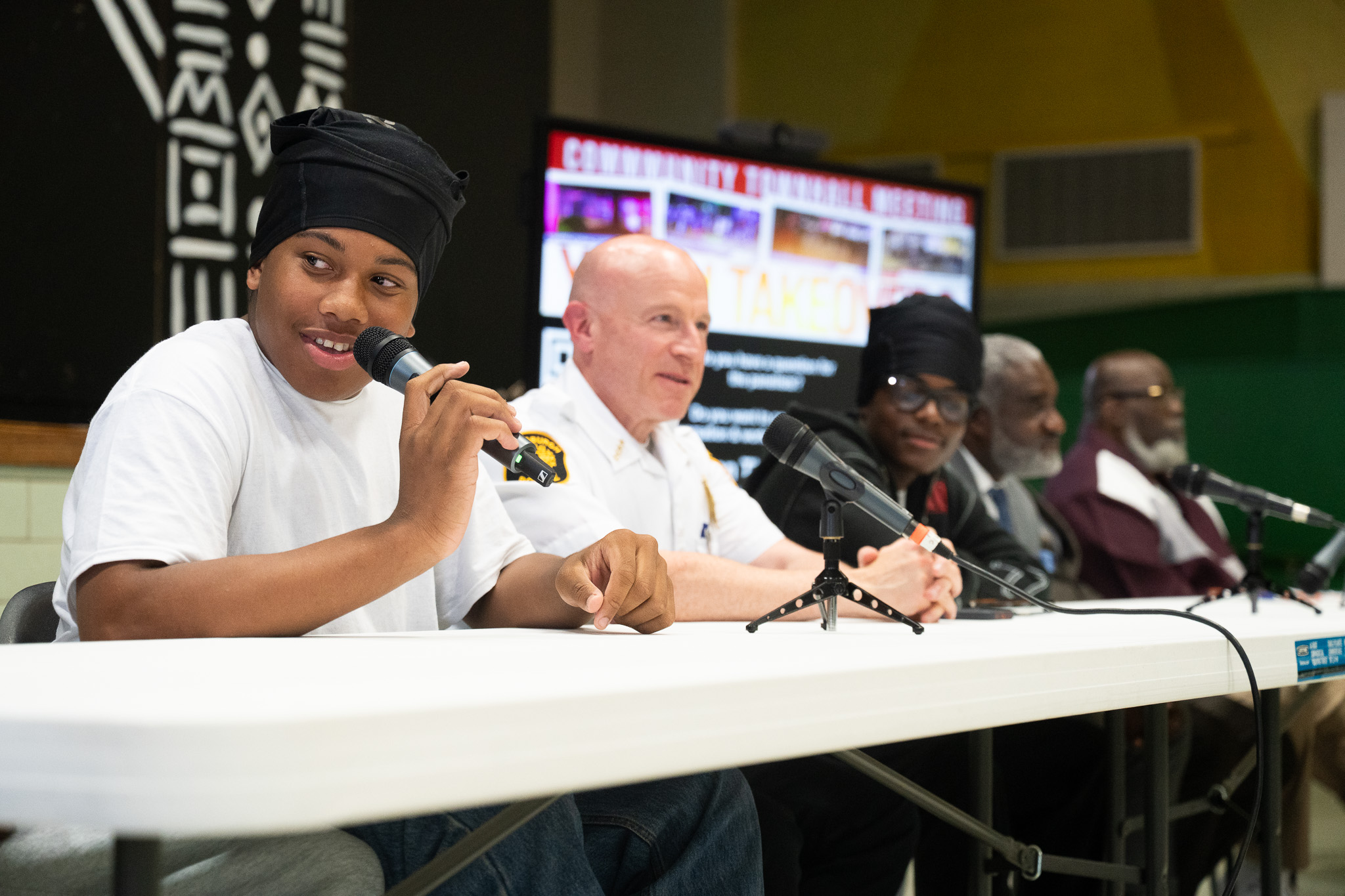
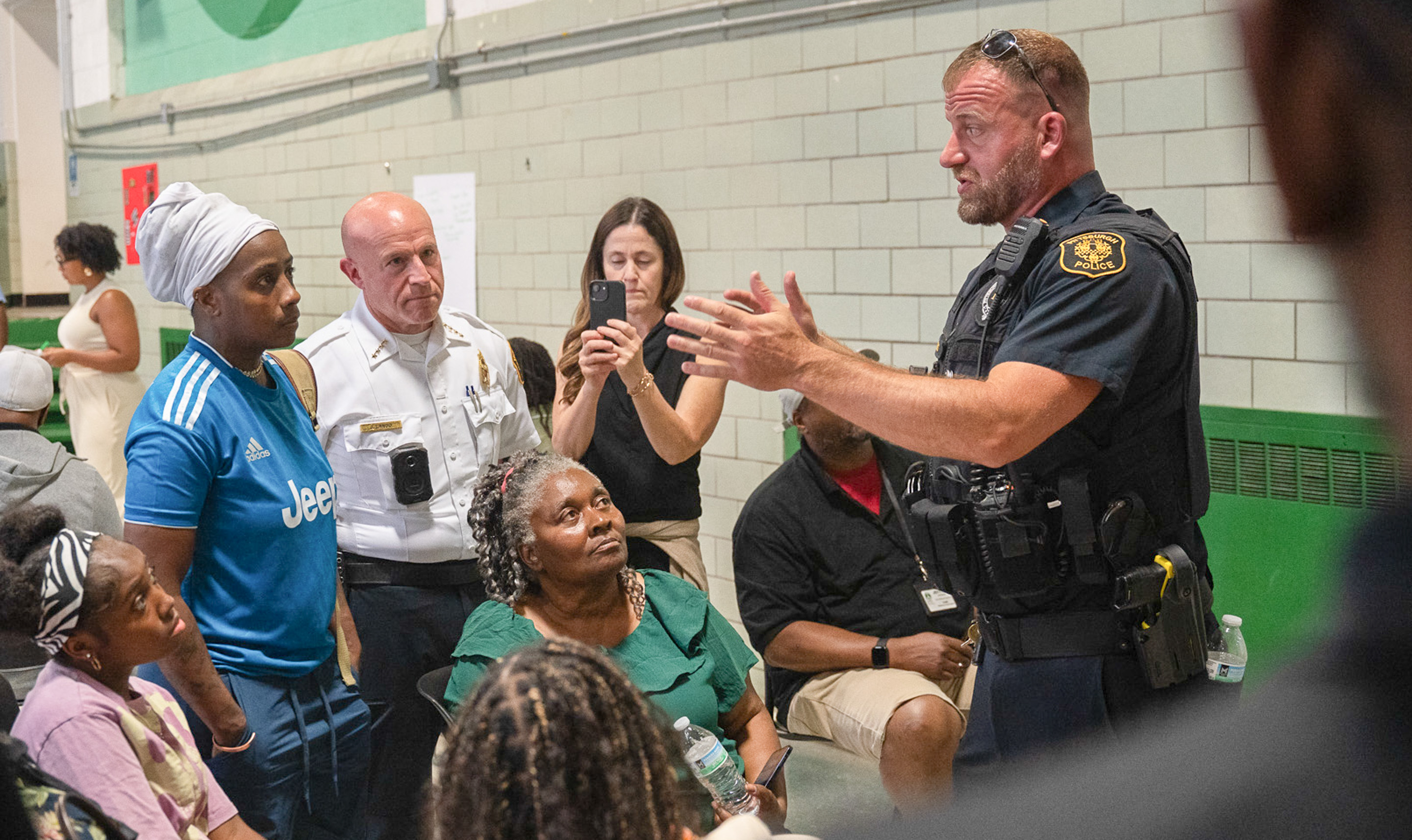
“What we’re trying to communicate the most is that we want to be heard,” said Sakiyah Valentine, a teenager who spoke at a townhall-style community meeting Wednesday in Homewood about youth gatherings.
Some mass gatherings have devolved into violence, including in Pittsburgh, prompting what T. Rashad Byrdsong called a reactionary response.
“Our goal is not simply to respond to the incidents after they occur, but to create conditions where you people feel connected, valued and engaged in productive activities,” said Byrdsong, founder of Homewood’s Community Empowerment Association, which hosted the community meeting Wednesday.
After fights broke out among dozens of teenagers gathered in Market Square in March, the Pittsburgh Downtown Partnership — which holds a special event permit in the square most days out of the year — instituted a chaperone policy for anyone under 18. Officials have pushed back on the idea that the policy is a curfew: From 3 p.m. to midnight Wednesday through Sunday, anyone under 18 must have a chaperone who is at least 21 in order to be in Market Square.
Jade Hefflin, a 17-year-old student at City Charter High School in Downtown, said such policies lead to confusion, particularly when some authorities enforce it more than others.
Earlier this year as the weather turned nice, Jade said she and her boyfriend were sitting on a bench in Market Square after school. She said a security guard told them they had to leave.
“The security guard came up to us [and said], ‘I don’t know if you guys are 18 but … I see your book bags on,’” she said.
Jade, who was part of Pittsburgh-based Youth Enrichment Services’ two-day Violence Prevention Symposium earlier this month, said the security guard told them he “didn’t want to assume,” but if they were school kids, they had to leave.
“I was literally just sitting on a bench in Market Square because — I don’t know, this was when they had just put the benches out [for the season] and it was nice outside,” she said.
Just trying to hang out
“I feel like we have Downtown and we have East Liberty, but all the businesses in East Liberty don’t want kids going there,” said 18-year-old Amira Bogan, who also took part in the symposium. “And then now with Downtown, there are a lot of restrictions, so you can’t go there. So it’s like, what do you even really expect kids to do?”
There are about 30,800 kids between the ages of 5 and 17 living in Pittsburgh, according to census data, and another 132,200 in the rest of Allegheny County. Amira said she believes most of the kids coming to the gatherings just want to hang out.
“I think kids really just want to have like, community. They want to have fun things, too — want to talk and have food and have the music,” she said. “So I think really it’s like, well, if the adults aren’t going to give this to us, I think we’re going to have to take things into our own hands and do it ourselves.”
That’s what Almethia Franklin, a research and sociology professor at Concordia University, has found as she attended these types of large-scale gatherings in Chicago.
“What’s actually happening is just young people standing around talking, dancing, filming each other,” she said. “The most common activity that I observe is just being somewhere together.”
Franklin, who has a doctorate in criminology, said calling the mass gatherings “takeovers” ignores the fact that most young people showing up to them aren’t there to sow disorder.
“The label … has been doing a lot of work in Chicago and across the country in how it’s shaping how media covers these events, how police respond to them, how elected officials talk about them,” she said. “But it was never grounded in what young people themselves say is happening.”
And what the young people say is happening, she said, is an attempt to be present.
“Young people constantly describe their attendance in terms of presence, not action,” she said. “They’re not gathering to do something — they’re just trying to be somewhere.”
She said they’re gravitating toward spots that tend to offer what their own neighborhoods often lack.
“We’re talking about things like safety: There’s safety in numbers,” she said. “And we’re talking about visibility: Somewhere to be that feels public — feels like it’s theirs.
“When you understand that,” she said, “the gathering looks less like a crisis and more like a reasonable response to structural disinvestment or to COVID-19 disruptions in their lives.”
Curfews and crime stats
The gatherings — both the perception of them and the violence into which some have devolved — have confounded elected officials and police leaders nationwide.
“This is not a Pittsburgh problem: Every major city is experiencing this,” Pittsburgh police Chief Jason Lando told the Post-Gazette. “Every police chief I talk to from every major city across the country, that’s their No. 1 issue right now.”
And there has been real violence at some of the gatherings. A 14-year-old boy was shot in the chest at a mass gathering in Detroit in mid-May. Two other teens have been charged in connection with the shooting. Detroit has a curfew in place that begins at 10 p.m. for 15-year-olds and at 11 p.m. for 16- and 17-year-olds.
A few weeks later in Clearwater, Fla., a 17-year-old boy was shot after a fight between two groups who were at a gathering escalated. The teen was later among six people charged for alleged “riotous behavior.”
In Pittsburgh, police had to disperse more than 100 teenagers in East Liberty on July 4. Authorities allege some in the crowd were throwing fireworks at each other and at police and their vehicles. Weeks earlier, they’d broken up a crowd of several hundred at nearby Liberty Green Park.
The mass gathering trend has led to renewed calls — and in some cases, the implementation of — curfews in some cities. Washington, D.C., began in May with juvenile curfew “zones,” which prohibited kids from gathering in groups of nine or more in certain areas after 8 p.m.
A permanent curfew went into effect earlier this month. It is from midnight to 6 a.m. year-round, though it starts an hour earlier on school nights from September through June. The district still has the authority to put earlier curfews in place in certain zones, and the curfew applies to every youth, resident or visitor.
Myriad studies have concluded that youth curfews do little to move the needle when it comes to violence affecting young people — either those perpetrating it or those victimized by it.
In 2016, the Campbell Collaboration, a nonprofit criminal justice policy group, reviewed 12 studies on the effectiveness of curfews for city youth.
“The pattern of evidence suggests that juvenile curfews are ineffective at reducing crime and victimization,” the review concluded. “The average effect on juvenile crime during curfew hours was slightly positive — that is, a slight increase in crime — and close to zero for crime during all hours.”
Lando said the norm in regard to youth offenders used to be one-off incidents involving two or three kids, but that’s no longer the case.
“We’re seeing kids from all over the county and sometimes even out of the county ... descending on neighborhoods in a coordinated fashion,” he said, noting police have every reason to believe social media is the driver of what’s become essentially mass marketing for these events. “Whether their intent is to commit a crime, I think what they fail to realize is that it’s extremely intimidating.”
The numbers, for the most part, bear that out. But no single data point tells the entire story.
Arrest data for juveniles, strictly at face value, shows that charges against juveniles across the city rose nearly 50% in the first six months of 2026 compared to the first half of 2025. But the underlying data points are more nuanced.
Incidents in which kids were arrested did increase, from 145 separate incidents in the first half of 2025 to 181 so far this year. But two other points are driving the 50% increase: On average, more kids are involved in each incident compared to last year, and more charges are being lodged against each juvenile compared to 2025.
That holds true in neighborhoods where youth disorder has been under a microscope.
In the Central Business District in the first half of 2025, there were 12 incidents in which 12 juveniles were charged with a collective 23 crimes.
During the same period this year, there were six more incidents, but they involved 28 kids and 95 charges — a fourfold increase.
One or two large-scale incidents can make increases look starker. In Downtown earlier this year, one incident involving six kids accounts for 30 of the 95 charges.
In East Liberty between Jan. 1 and June 30, 2025, there were nine incidents in which 11 kids were charged with a total of 38 crimes. In the same time frame this year, there were 15 incidents in which 28 kids were charged with a total of 98 crimes.
Two incidents account for nearly half of crimes filed against kids in East Liberty this year, according to the data, which comes from reports that the city submits for the FBI’s National Incident Based Reporting System each month.
The data also shows that juvenile arrests have made up a fraction of the arrests made so far this year in Pittsburgh. Officials say it is also not an accurate reflection of how much crime juveniles are actually committing: Not every reported crime has a known perpetrator, making it impossible to know whether the alleged suspect is a child or an adult.
‘They want to be seen’
Kevin Beckford, a D.C.-based researcher who co-founded the college-readiness program The Hustlers Guild, is quick to note that juvenile arrests have continued to drop since the late 1990s. He said the kids he hears from say the representation of the mass gatherings “is grotesquely misconstrued.”
He said the term “takeover” began simply as teenage hyperbole and posturing.
“Not to say that ‘takeover’ has an innately bad meaning, but I think the intention was to kind of be cool,” he said. “Like, ‘We’re gonna take over the park, we’re gonna take over this space’ — teenagers asserting their personhood.”
The term “takeover,” though, easily lent itself to being cast as something else, Beckford said — like “mob” or “swarm.” Those words, he said, are even more loaded, and they can distort the narrative straight from the kids’ intent.
It’s really just the teenage experience, Beckford said.
“Young people want to be affirmed, they want to be seen ... they’re coming into their own, and so there’s this element of posturing and performance,” he said.
The intention isn’t that different than gathering at a Friday night football game or at the mall on a Saturday. “We shouldn’t be surprised when we see teenagers acting like teenagers,” Beckford said.
When teenagers in Pontiac, Mich., tried to organize a large-scale gathering in late May — one that would coincide with the city’s Friday art crawl — law enforcement ended the gathering before it could begin.
But the seed was planted, both among kids and city leaders.
“They said that this is as much their city as it is anybody else’s,” Councilman Chris Jackson said of the conversation he had with the teen organizers after the original gathering was thwarted. “They feel like none of what they want is being prioritized.”
And so they turned the “takeover” into a “kickback” — a city-sanctioned takeover, of sorts.
A downtown club, ELEKTRICITY, opened its doors to teens free of charge. There was a DJ and dancing, and the city brought in free food and a gaming station.
It worked, Jackson said: More than 400 kids showed up to the May 29 event.
“Basically, it was … what they were probably trying to accomplish [with the original plan],” he said.
Other cities have tried the same tactic with varying levels of success.
In Detroit, where some youth mass gatherings have descended into disorder and fights — and in one instance, a shooting and attempted robbery — leaders held their own Teen Kickback event in April. City officials said they worked with Detroit youth to plan the event, which included food, music, a DJ and other activities.
Detroit officials touted the event as a success, though some have said the attendance was just a few dozen kids. The 19-year-old behind many of the flyers advertising “takeovers” in the city told The Detroit News that kids want something that is strictly theirs.
“They want to feel like it’s their thing, you know?” he told the newspaper.
Amira, the 18-year-old YES symposium participant in Pittsburgh, said it feels like when leaders and the media talk about the mass gatherings, “they’re really quick to paint a certain picture, and it doesn’t really hit the whole entire story.” It feels like a misunderstanding between the generations, she said.
She said it goes back to feeling like the adults aren’t listening.
“I don’t think we should be so quick to be like, ‘we need to take things away’ or ‘we need to kick these kids out of these spaces,’” she said.
Several teenagers indicated they believe some people who spread flyers advertising the mass gatherings are just internet trolls trying to stir the pot, while others are actual creators trying to make a space for young people. Amira said that kind of leadership should be encouraged.
“There are so many event-makers in Pittsburgh who actually want kids to be a part of their spaces, too,” she said. “So I feel like if you would just collaborate and talk, we could make something good out of it.”