
For WPIAL recruits, money talks
When a highly-rated high school football player makes a college decision nowadays, it could be all about the Benjamins.
At least that’s what a number of the top senior players in the WPIAL are saying.
The pay-for-play and NIL deals that have become a big part of college football the past few years are now making a significant impact on recruiting. Colleges often tell the recruits how much money they will make as a freshman. And for some of them, the highest bidder wins.
The WPIAL has seven players who are committed to power conference colleges and one to Notre Dame. The Post-Gazette spoke with a few of them about the role money played in their decisions and the choices of others.
McKeesport’s Kemon Spell is ranked the No. 1 senior running back in the country by some scouting services and already has made a verbal commitment to Georgia. He had scholarship offers from colleges across the country.
When asked whether money affects college decisions, Spell said, “110 percent.”
Spell committed to Penn State before his sophomore season. But he backed out of the commitment last October when James Franklin was fired as Penn State’s coach. Spell committed to Georgia this February.
Spell recently told the Post-Gazette’s Brad Everett that the Bulldogs will pay him $1 million next season through NIL and revenue sharing.
Believe it or not, Spell probably could have earned even more elsewhere.
247sports reported that No. 2-ranked running back David Gabriel Georges of Chattanooga, Tenn., has a deal worth $2 million a year from Tennessee.
Spell said he didn’t pick Georgia because of the money.
“I talk to guys across the country who have gone to other places than Georgia, and some of them pick the money over the development and getting to the [NFL],” Spell said. “That’s what is ruining the college football world. Everybody is picking the money.
“What if you transfer from a school that wasn’t the best fit for you? What if you’re not getting developed the right way? You have to think about the bigger picture, and what’s ahead.
“I could’ve gotten more money from other places, but I picked Georgia for the reasons that I want to get to the NFL and I’ll be coached by the best guy [Kirby Smart] each and every day. He’s going to be on me and coach me hard. I didn’t pick Georgia for the money. I picked it for the development piece and getting to the [NFL].”
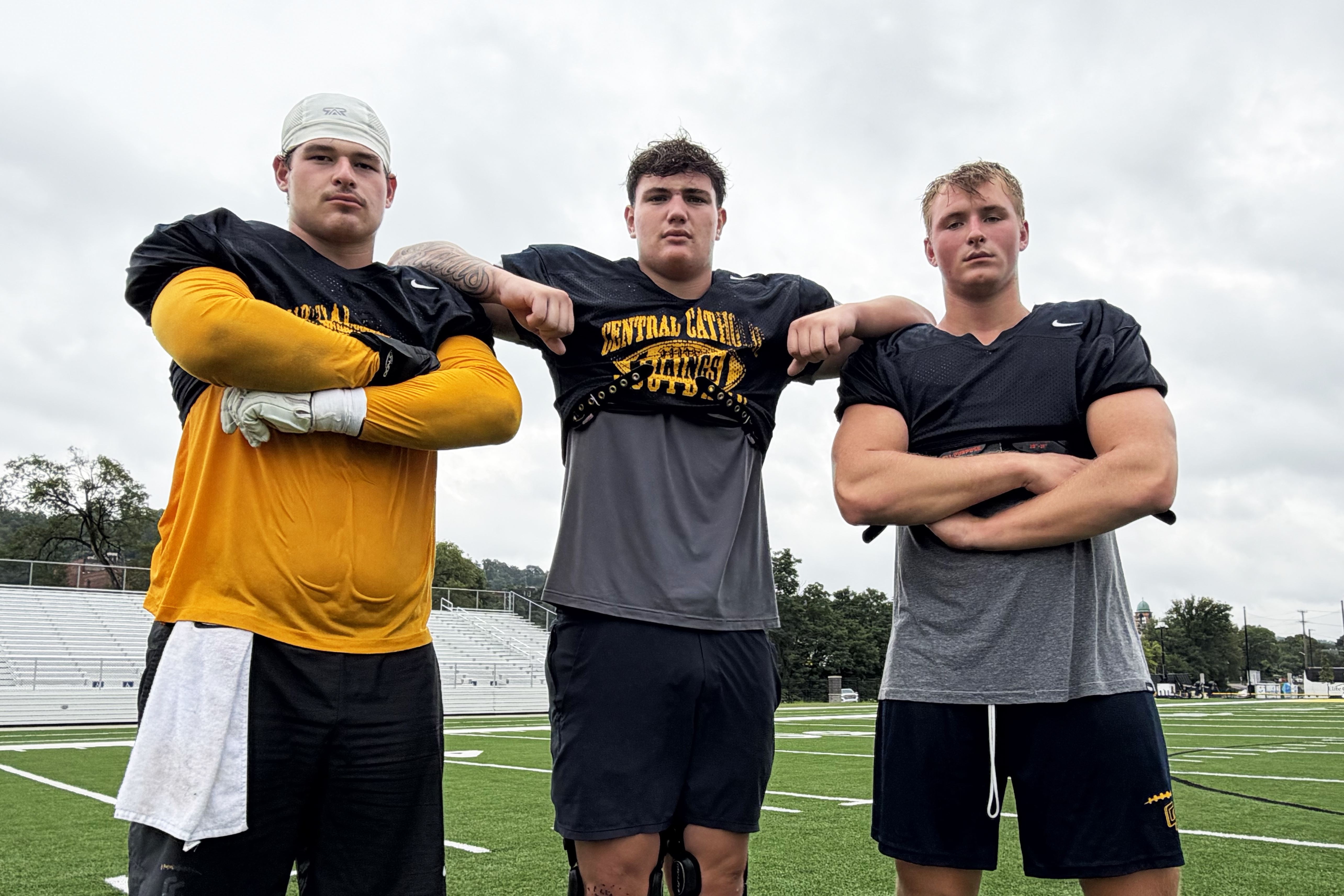
Jimmy Kalis is a 6-foot-6, 285-pound offensive tackle at Central Catholic who committed to Ohio State in April. Georgia also was one of his finalists, along with Clemson, Miami, LSU and Texas.
Kalis said he has talked with Spell in the past and Spell tried hard to get Kalis to pick Georgia.
“Once you pick your top six schools, the money talk speeds up,” Kalis said. “But you have to stay true to yourself. I agree with Kemon in that money can play a big role for some, but Kemon stayed true to himself in trusting Coach Smart. It will pay off for him in the long run. That’s the mindset you have to have.
“Others offered me more money than Ohio State, but I stayed true to myself. I didn’t want to go to a place that was, like, buying me. I wanted to go to a place that was strong in faith and culture. … I went with Ohio State, not because they’re the highest bidder, but because maybe I can be a three-year starter and get drafted into the NFL.”
Kalis is one of three Central Catholic senior offensive linemen committed to major colleges. The other two are tackle James Halter, who is committed to Notre Dame, and interior lineman Jon Sassic, who picked Penn State.
“I don’t personally know any player who picked a school just for the money,” Halter said. “I think it varies from person to person, based on their background and the situation they’re in. It makes a lot of sense for players who don’t come from much money to have money be a big part of their recruitment.”
Halter’s father, Jordan, played at Notre Dame in the early 1990s.
“I chose Notre Dame more for the school itself, the alumni and the networking after college,” Halter said. “Football is going to end at some point and being able to have a Notre Dame degree and Notre Dame connections means a lot.”
A year ago, the Post-Gazette talked to a number of the top WPIAL recruits in the class of 2026 and they said it’s common for a power conference college to offer at least $100,000 to an incoming freshman. Two WPIAL seniors last year said they were offered between $400,000 and $500,000.
A number of top high school players across the country now have agents while they’re in high school. The agents might help in getting deals with colleges and might stay with the player through college.
Halter said he made his Notre Dame choice before he hired an agent. Spell said he already is represented by Rosenhaus Sports, an agency in Miami run by Drew Rosenhaus — one of the best-known football agents ever.
McKeesport’s Javien Robinson is a senior receiver who is committed to South Carolina. He is the first WPIAL player to choose the Gamecocks out of high school since Seton LaSalle quarterback Rich Ingold in 1981.
Robinson was asked how much of a role money can play in a recruit’s decision.
“It’s huge,” he replied. “There’s a guy I play 7-on-7 with. He’s committed to a school, and now I’m pretty sure he’s going to flip somewhere because of the money.”
Robinson said money was a factor in him picking South Carolina but said it was not “a big part.”
“The money I’ll make is just around what I would have made if I went somewhere else,” he said.
Central Catholic’s Sassic said he chose Penn State even though a few other schools offered more.
“People can say they like the location of the college, or the coaching staff or the development, but it’s just about the money for some players,” Sassic said. “Some kids go to a school for a year, get a bag and leave.”
Sassic did his homework on all of the coaching situations before he picked the Nittany Lions.
“The factors I looked at were whether the offensive line coach and the head coach were right for me,” he said. “Florida State was big on my board, but their coach is on the hot seat. If he doesn’t win eight or nine games, he’s gone.”
And for Kalis, choosing Ohio State was about “the college experience” and living out a dream.
“At the end of the day, that money is not going to make you feel better. It’s the people you play with,” he said. “I dreamed of playing at Ohio State since I was in eighth grade.”