
HOUSE PROUD
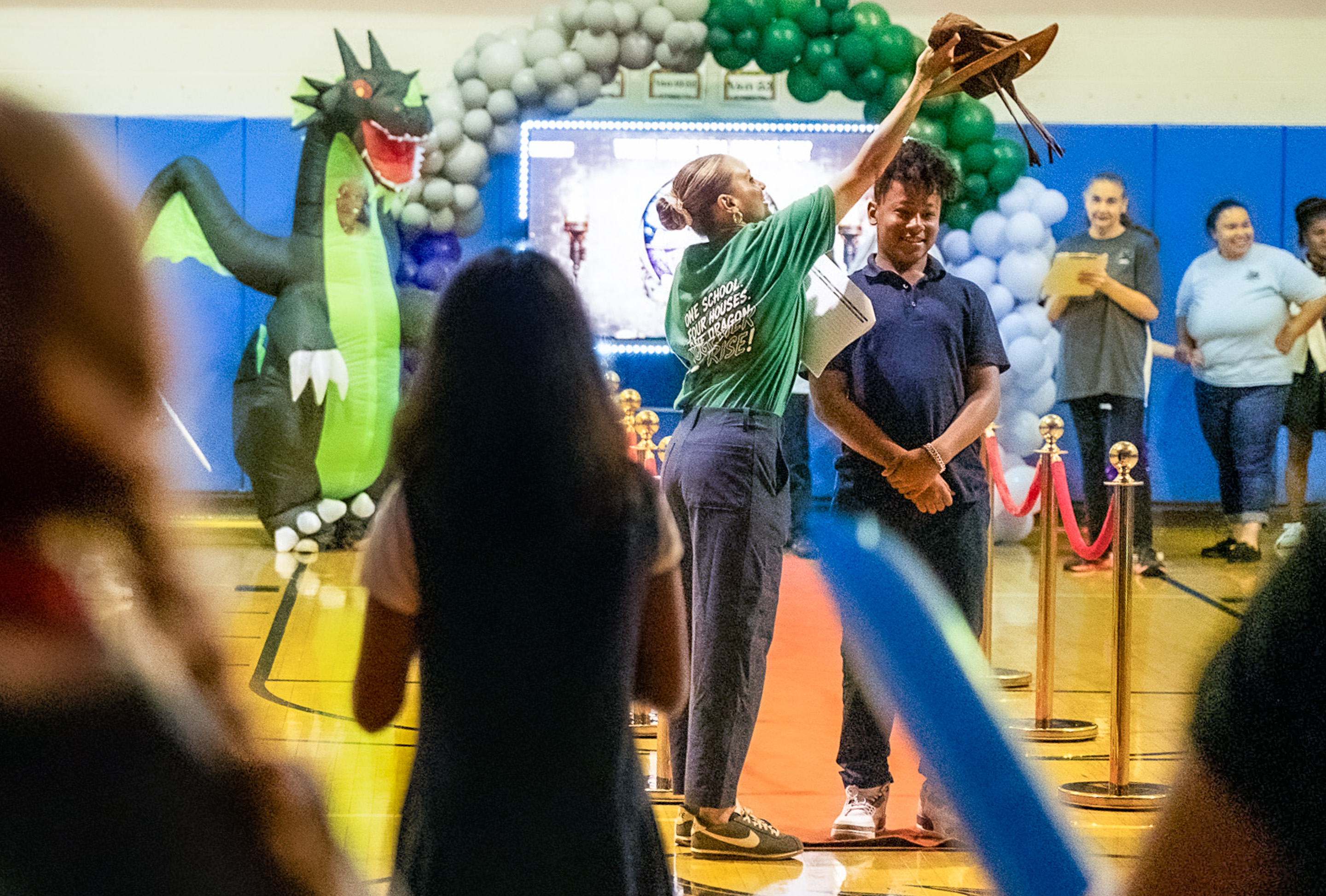
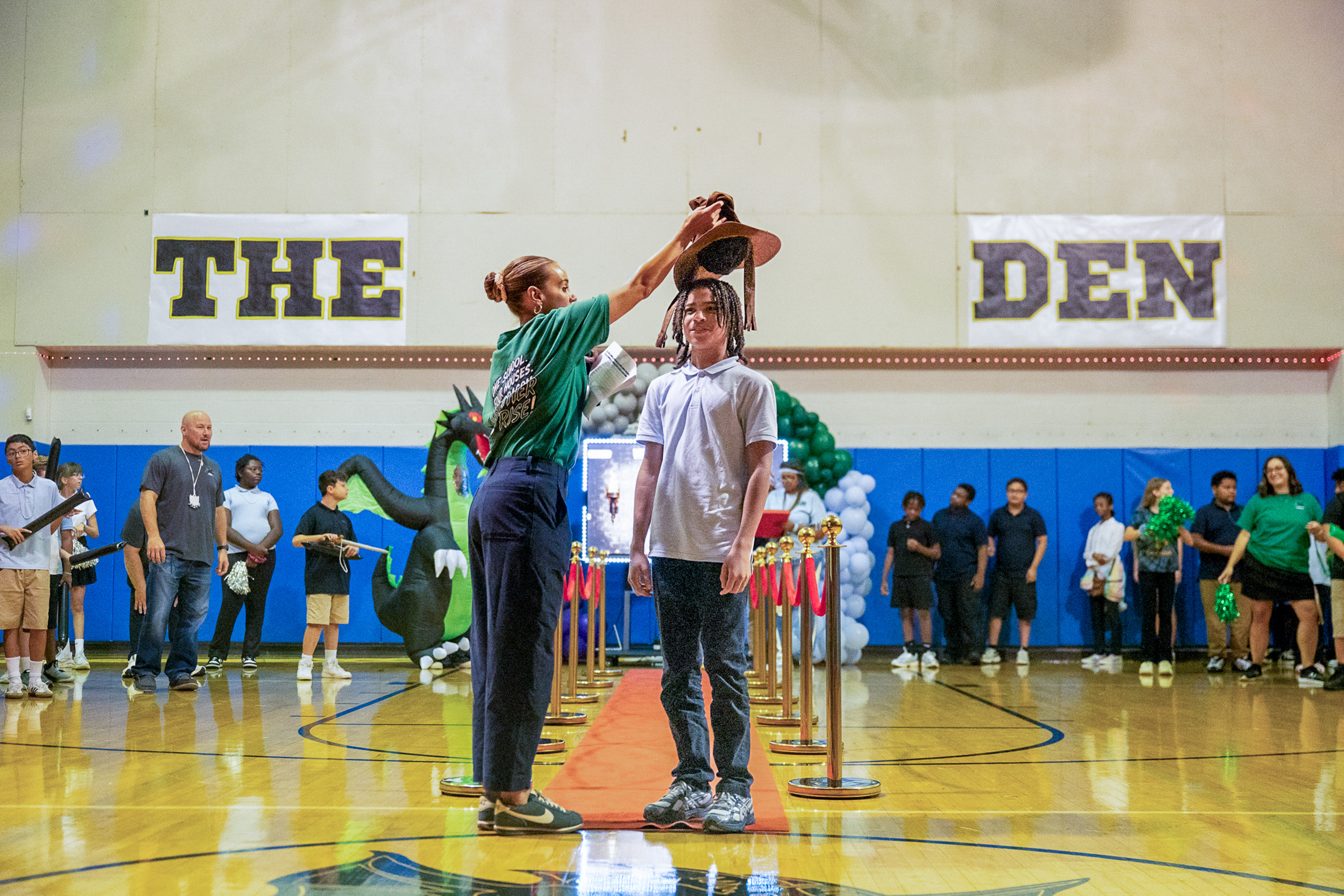
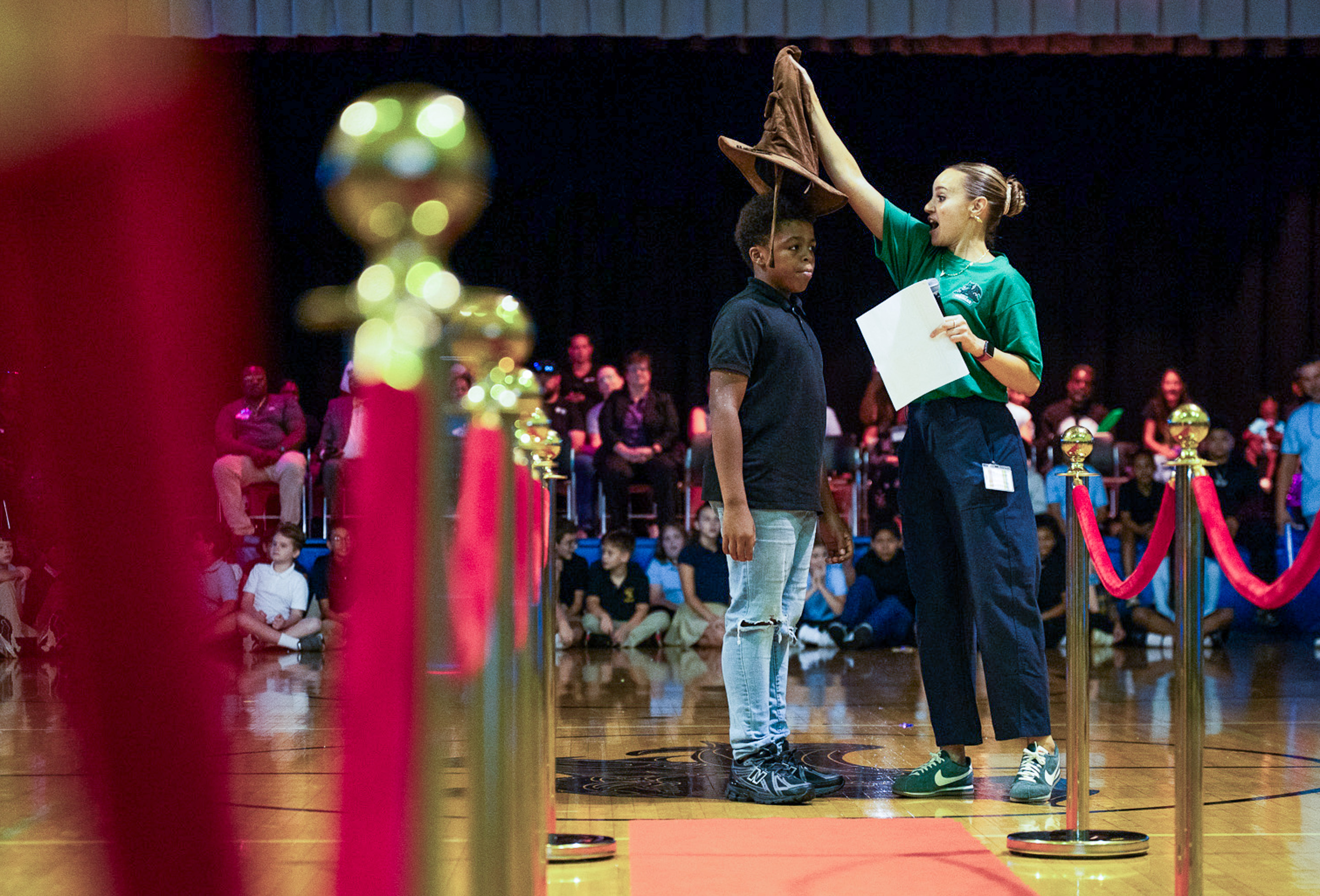
Pittsburgh Carmalt Principal Alexa Tokarski-Jones carefully hovered a Harry Potter-inspired “sorting hat” over a student who stood shyly for a second, waiting to hear which of four houses he would be sorted into.
The word “Azure” boomed across the gym, spoken by a staff member hiding behind a stage curtain, sending the smiling student running to a blue-clad group of teachers who greeted him with hugs and high-fives on a Friday morning in mid-September.
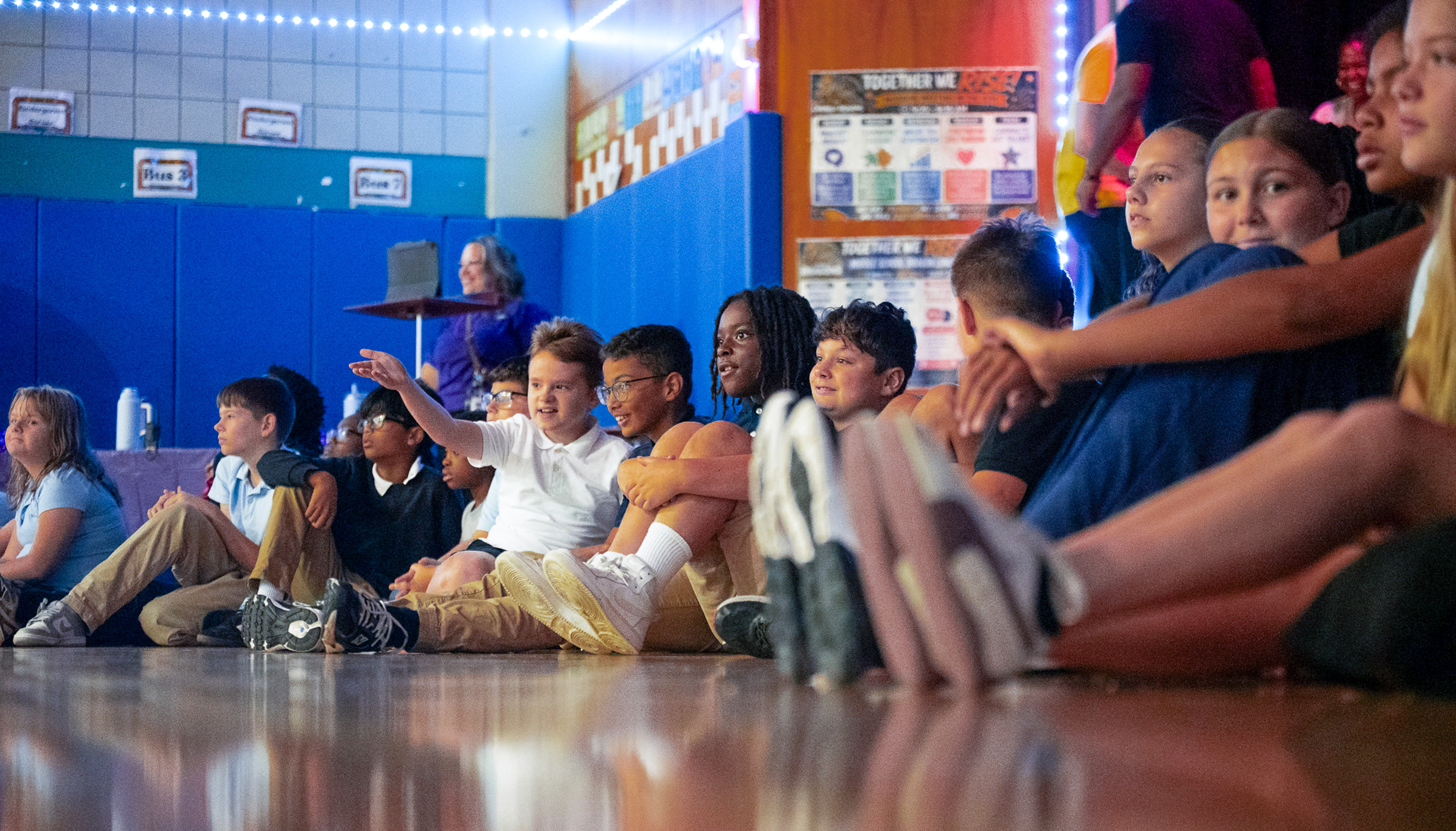
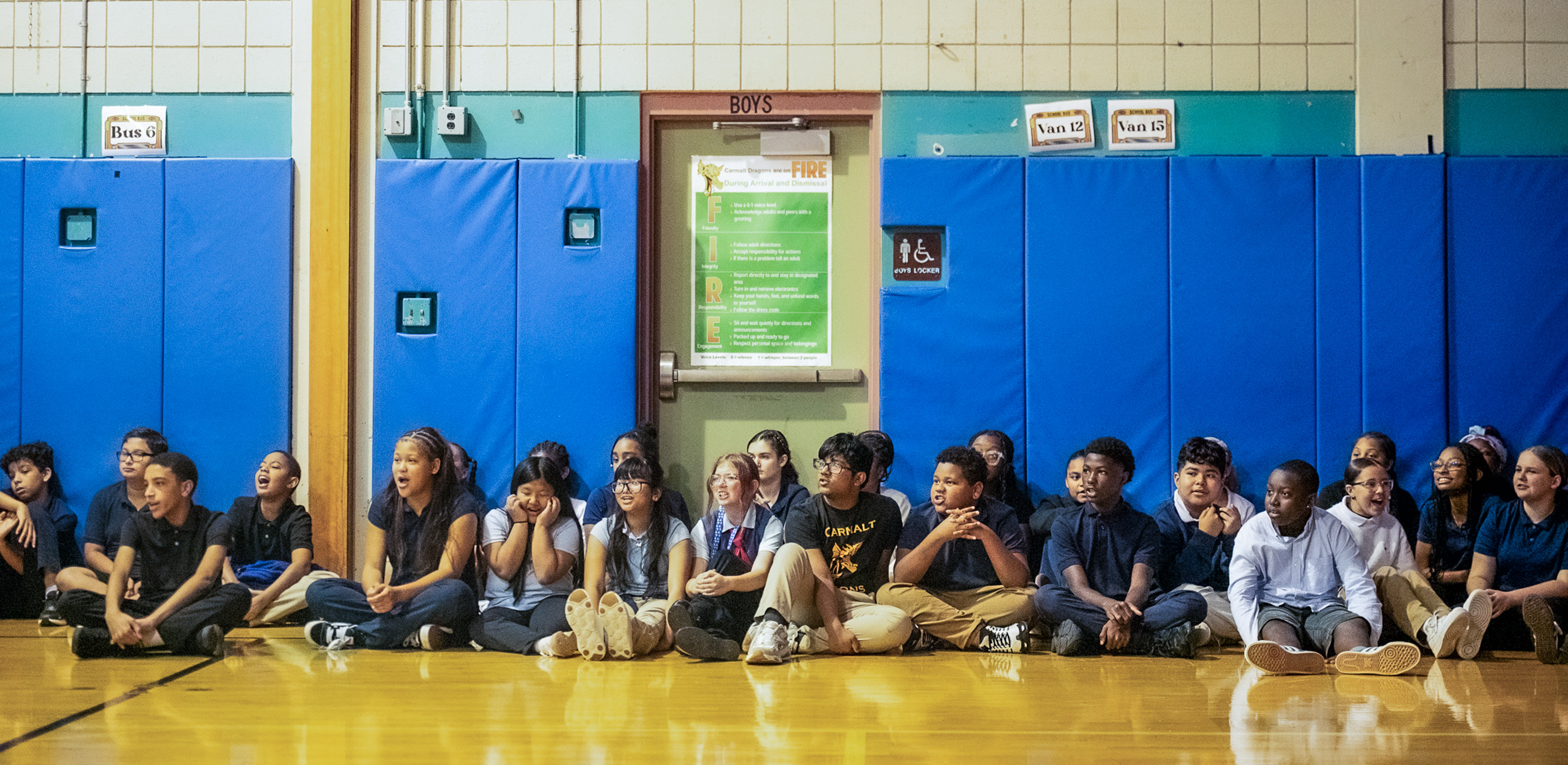
The system, new to Carmalt, puts six through eighth graders into houses, where students from all three grades will meet throughout the year and compete in different challenges. The goal is to build community within schools and bolster positive behaviors and attendance.
“They need a system, a way to foster identity, foster belonging, agency, purpose. … When students feel connected to the space, the school they’re in, they will absolutely connect to their learning,” Tokarski-Jones said before the event.
Districts across the region have been starting house systems — used in United Kingdom boarding schools for centuries and popularized by Harry Potter, a book and movie series in which students are put into houses by a talking sorting hat.
At Duquesne City schools, a teacher yells out a student’s house as the kid goes down an inflatable slide. Allegheny Valley uses an online sorter to choose houses, announcing them during a ceremony. And a Gateway elementary school this year debuted six Pittsburgh-themed houses: Bridges, Steel City, Yinzer, Champions, Elevation and Three Rivers.
Locally, districts either create their own systems or follow framework created by the Atlanta-based Ron Clark Academy, which allows districts nationwide to use its houses for free. The Consortium for Public Education, a McKeesport-based nonprofit, is also creating a regional system so local schools could use the same houses to connect students from across the area.
Nationwide, some districts have seen academic and attendance improvement after implementing house systems, the Ron Clark Academy found.
Some schools working with RCA have seen discipline referrals decrease by 90%, said Junior Bernadin, the academy’s chief student affairs officer and global house system expert. Attendance and academic performance also have improved.
“When students feel like they belong and have staff members who care about them ... they begin to shine and they shine bright,” Bernadin said.
“This house system has served as a huge mechanism.”
The sorting
Two days after students return to Duquesne, seventh and eighth graders gather in a field and one by one pluck a ball from a box, the color coordinating with a house. Duquesne uses four RCA houses — Isbindi, the house of courage; Altruismo, the house of givers; Reveur, the house of dreamers; and Amistand, the house of friendship.
Students then go down the slide while a staff member standing on a ladder yells their houses out through a bullhorn. At the bottom, students are surrounded by other kids in their house.
Duquesne, serving 460 students, 89% of whom are economically disadvantaged, started the program in 2024-25 after a visit to the Ron Clark Academy. In the years prior, said Andrew Uram, a middle school math teacher, “the overall culture in the school was pretty bad.”
Kids, he said, weren’t excited to come to school and would just go through the motions. Around the same time, a group of middle schoolers told the superintendent they weren’t happy with the previous positive behavior intervention program they called “babyish,” said teacher Jessica Taylor.
Today “it’s very different,” Uram said.
Kids earn points, tracked through an RCA app costing $1,200 per year, for academic excellence, effort, good character, outstanding performance and school spirit. Points are displayed on a hallway TV allowing kids to celebrate between classes.
Top houses celebrate each month with a party.
“They have a joy coming here,” Uram said. “You still see some behaviors but you see a lot of kids defending each other, you see a lot of kids addressing each other because they know what they do is going to affect their house. It affects the overall culture here.”
At Allegheny Valley, attended by 900 students, 45% of whom are economically disadvantaged, students have stepped into leadership roles since houses were established at Acmetonia Elementary in 2023-24.
There, kindergarten and first graders are placed in the same house as their teacher. They are sorted as second graders and remain in that house through sixth grade.
Acmetonia has six houses — they had to add an additional house last year as sizes grew — based on rainbow colors. Red is the house of love; yellow, gratitude; orange, perseverance; green, bravery; purple, creativity; and blue, leadership.
At monthly house meetings — the school sees an attendance bump on those days — older students often work with younger kids, said Rebecca Garbisch, an elementary school counselor.
Students are also introduced to teachers across the school, helping them build relationships with teachers from higher grades.
Garbisch said she hopes that as the program continues, it will garner buy-in from the entire staff and become a routine for students.
“I would love for it to be something … that outlasts me,” Garbisch said. “Maybe that looks differently in 20 years, but something that can make students feel like school is fun and somewhere that they belong.”
Gateway’s University Park Elementary launched its Pittsburgh-themed house system this school year. It’s the first school in Gateway — serving 3,500 students, 57% of whom are economically disadvantaged — to start a house system. Staff wanted to create something fresh for students after five years of its Gator Pride Program in which students earned tickets for modeling safe, responsible, respectful and kind behaviors.
Through the house system, second through fourth graders can apply to be house leaders or bus, hall or cafeteria monitors.
The 19 student leaders stand up in front of their houses of up to 60 kids to present on different topics during meetings.
Students were excited during their first sorting earlier this year, said Principal Jen Hoffner and school counselor Karen Montgomery. The students cheered as they were put into different houses and “erupted” when student leaders were named, they said.
They hope the program will expand to the district’s three other elementary schools, allowing kids to build relationships across the district.
At Carmalt, officials created its house system, rather than using the RCA model like other Pittsburgh Public schools, to boost teacher buy-in, said the principal, Tokarski-Jones.
At the time, she said, students were meeting positive behavior expectations but “what was missing was this ownership. Adults really want to place all of the accountability on kids. But it’s our job to teach them. … It’s our job to create that environment where every child belongs, where every child sees themselves in our school.”
That Friday, teachers ran across the gym with house flags representing Azure, the house of kindness, compassion and patience; Steel, honesty, courage and respect; Onyx, accountability, dependability, advocacy; and Veridian, commitment, resilience and curiosity. House leaders danced down a red carpet, some holding pompoms or thunder sticks. A retired paraprofessional danced in an inflatable dragon suit.
That mid-September Friday, said Tokarski-Jones, was a day for celebration. But the work begins in the coming days and weeks to ensure the program’s success for students, families and the community.
“Today’s the day,” Tokarski-Jones said, “but next week, let’s get it.”