
Region’s state-owned universities report stable enrollment as projected cliff looms
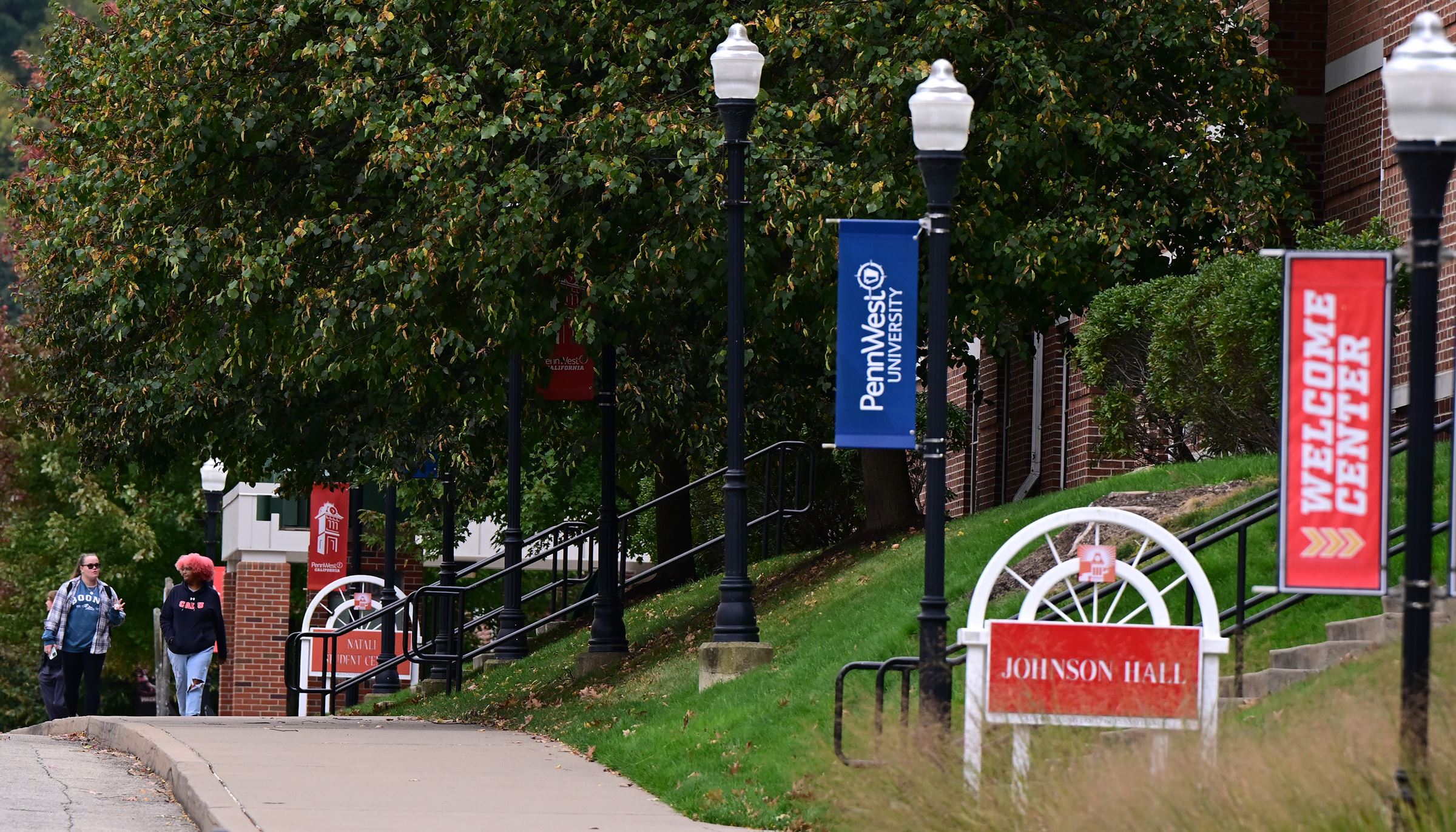
State-owned universities in Western Pennsylvania reported stable enrollment this fall as they brace for a projected yearslong decline in students that figures to affect schools across the Northeast.
Slippery Rock University and Indiana University of Pennsylvania both saw modest upticks in their headcounts — of 0.3% and 0.5%, respectively — while Pennsylvania Western University saw a slight decline of 0.1%, state system officials said during a board meeting last week.
That brings fall 2026 enrollment figures to 8,654 students at Slippery Rock, up 29 students; 9,130 at IUP, up 48; and 10,542 at PennWest, down six.
Across the state university system’s 10 schools, overall enrollment fell slightly by 0.6%, to 82,513 students.
The figures come as state-owned schools and universities prepare for the enrollment cliff that experts say is tied to declining birth rates that began during 2008’s Great Recession.
Between 2025 and 2041, the share of high school graduates is projected to drop 13% nationwide and 17% in Pennsylvania, one report estimates. Schools are preparing to compete for a shrinking pool of young people, many of whom are already doubting the value of a college degree.
A 10% loss in students amounts to a $60 million revenue loss for the state system, Chancellor Christopher Fiorentino said.
“Going forward, we’re going to start to see declines in high school graduating populations,” Fiorentino told the Post-Gazette. “That’s certainly something that will be on our mind.”
The decline will almost certainly put a strain on the state-owned schools, which have already seen significant drops in students. Fifteen years ago, the system enrolled more than 118,000 students. The student population has fallen by more than 30% since.
The system several years ago consolidated six schools into two — forming PennWest and Commonwealth University — to address the falling enrollment and financial woes.
The systems are aiming to stabilize enrollment by directly admitting some students who haven’t applied, emphasizing retention, expanding dual enrollment, analyzing the programs offered, reducing some faculty through retirement or relocation, and introducing a last-dollar scholarship program that will roll out next year, Fiorentino said.
“[We need] to be honest about the years ahead and ask now while we have time to make thoughtful decisions rather than reacting later,” Fiorentino said during Thursday’s meeting. “The decision we make now will determine how well [state system] universities are prepared for this demographic shift.”
The system is also considering offering some reduced-credit, three-year bachelor’s degrees to its portfolio.
A growing number of states, including Ohio, have approved these programs, which supporters say promote efficiency, affordability and retention in fields such as psychology or communications. Local and national detractors argue accelerated degrees don’t fully equip students for the workforce.
These increasingly popular degrees “threaten academic integrity,” argue American Association of University Professors President Todd Wolfson and American Federation of Teachers President Randi Weingarten.
“A bachelor’s degree should both prepare students for the workforce and provide them with deep learning, broad intellectual development and sustained engagement with faculty and peers — not simply the fastest possible route to the labor market,” the pair wrote in a summer statement. “Compressing or reducing the curriculum threatens to narrow students’ education at precisely the moment when society needs graduates with stronger critical thinking, communication skills, scientific literacy and civic understanding.”
Pa. system leaders indicated in July that these degrees could soon be offered by the state-owned schools. Now, they’re taking a step back to talk to faculty members and workforce professionals about the pros and cons, said Fiorentino, who believes the three-year degrees are a “good idea.”
“I think it has a limited market,” Fiorentino said. “I don’t believe that three-year degrees are going to replace four-year degrees as the standard.
“I do believe that we can structure a three-year degree to have a strong general education component and a strong major component.
Balancing a budget
The board on Thursday also approved a request that the state bump the system’s budget by 5.5%, or $34.4 million, in 2027.
The 10 state-owned schools received more than $625 million from the state last year, the same as the prior year.
Fiorentino said a funding boost will allow the state universities to freeze tuition, which currently stands at $8,338 after a 4.3% increase last year.
Several university union leaders had pushed Fiorentino and the board to ask for a 15% funding increase. Fiorentino said he didn’t find that request “viable.”
“We understand the challenges of the commonwealth,” he said. “We’re trying to achieve a combination of keeping our costs under control and requesting more funding. We believe … a 5.5% increase and the cost control measures combined would enable us to be able to hold tuition level.”
Board Chair Cynthia Shapira concurred during Thursday’s meeting, adding that budget requests are about “balance” and “political realities.” She hopes state leaders — who kept the system’s funding stagnant last year despite a request for more funds — see funding increases as an investment.
“We should talk about a way of presenting [our request] that describes it as a strategic investment,” Shapira said.